Casinos That Accept Debit Cards in the UK
 Available in GB
UK casino cashiers may accept Visa and Mastercard, but a card’s network logo alone does not ensure a payment will go through.

Table of Contents
- How debit-card deposits work at UK online casinos
- What makes a debit-card casino worth comparing
- Making a deposit: limits, minimums and financial controls
- Debit cards, credit cards and the UK rules
- Getting casino withdrawals back to your debit card
- Keep the payment route simple: use your own account
- The real cost of paying by card or another method
- Using a debit card to fund online slots
- Check the cashier before relying on a payment method
- Visa debit cards: acceptance and safer payment habits
How debit-card deposits work at UK online casinos
A debit card is a way to move money from your bank account into an online casino account. You choose it in the cashier, enter the requested card details and the amount, then approve the payment if your bank asks you to. If the transaction goes through, the casino balance updates and you can use that balance on the site.
That is the basic idea behind a debit-card deposit. The card is not a special casino product; it uses the payment route attached to your everyday bank account. UK casinos commonly accept debit cards, including Visa and Mastercard. Those names tell you which card network is involved, but they do not mean every card bearing the logo will work at every cashier.
I used to treat the card logo as a guarantee. It isn’t. A payment can be declined even when the casino displays the network, and the reason may sit with the bank, the card product or the casino’s payment setup. The practical point is to follow the cashier’s instructions rather than assume that a card accepted elsewhere will work here.
When you’re choosing a UK casino that accepts debit cards, payment details matter alongside the games. Use this list as a starting point, and check each casino’s current debit-card terms before signing up.
Payout speed: 1-3 business days Zombillion lists a payout speed of 1–3 business days. Check its terms for details on debit-card deposits and withdrawals.
Payout speed: 1-3 business days Chanze lists a payout speed of 1–3 business days. Confirm its current debit-card payment terms before you play.
Payout speed: 1-3 business days BeOnBet lists a payout speed of 1–3 business days. Review its payment terms to see how debit cards are handled.
Payout speed: 1-3 business days EvoSpin lists a payout speed of 1–3 business days. Check the casino’s current terms for debit-card payment details.
Payout speed: 1-3 business days Amunbet lists a payout speed of 1–3 business days. Its debit-card terms are worth checking before you sign up.
Payout speed: 1-3 business days x3bet lists a payout speed of 1–3 business days. Check its payment terms for information about using a debit card.
Payout speed: 1-3 business days SpinFormula lists a payout speed of 1–3 business days. Confirm the current debit-card options in its payment terms.
Payout speed: 1-3 business days NightLuck lists a payout speed of 1–3 business days. Check its terms to confirm how debit-card payments work.
Payout speed: 1-3 business days Britsino lists a payout speed of 1–3 business days. Review its current payment terms for debit-card details.
Payout speed: 1-3 business days Dieselwin lists a payout speed of 1–3 business days. Check its terms for the latest information on debit-card payments.
What happens after you choose the card
The cashier normally asks you to select a payment method and enter the deposit amount. For a card payment, it may request details such as the card number, expiry date and security code. The exact screens vary, so pause before confirming and check that you are still on the casino’s own payment page.
Once you submit the payment, the request passes through the casino’s payment system and the card network to your bank. Your bank may approve it, decline it or ask you to confirm that you made the transaction. If the bank approves the payment and the casino receives confirmation, the money is added to the casino balance. If anything fails along the way, the balance may not update as expected; check the transaction status before trying again, so you do not accidentally send duplicate requests.
A successful card deposit can feel almost immediate from the player’s side. That does not mean every step is invisible or identical. You might see a bank approval screen, receive a notification, or be sent back to the cashier while the payment status updates. Keep the casino page open until you get a clear result, and do not press the confirmation button repeatedly just because the screen takes a moment.
If the payment is declined, read any message shown by the cashier or bank before making another attempt. A generic error may not tell you which part of the route failed. Your bank can clarify whether it blocked the payment, while casino support can check whether a transaction reached its system. I’ve learned not to guess at the cause and keep resubmitting. That only muddies the trail.
The card is a funding route, not a casino account
It helps to separate the bank card from the account you use to play. The card sends funds into the casino account; it does not replace that account or change how the casino records your balance. After the deposit appears, the funds sit within the account’s balance until you use them or otherwise manage them through the casino.
That distinction sounds obvious, but the payment screens can make the whole process feel like one action. You are actually moving through several linked steps: selecting a method, authorising a bank payment, and waiting for the casino to register the result. If the balance has not changed, check the transaction record rather than assuming that a bank notification alone proves the casino credited it.
Debit cards are familiar, which is part of their appeal. You may already use the same card for ordinary purchases, and the payment flow is recognisable. But familiarity is not the same as universal acceptance. Visa and Mastercard are commonly supported at UK casinos, while the cashier remains the place to see which methods are available for the account you are using.
A logo on a general payments page is not a promise that a particular transaction will succeed. The cashier’s current options matter, and the bank still has its own approval role. I keep those separate in my head now: the casino can offer a card route, but the bank has the final say on whether that card payment is authorised.
Remote gambling licensees serving Great Britain must hold the relevant UK Gambling Commission licence.
For a UK player, the casino account also sits within a regulated gambling service, rather than being an ordinary shopping account. Remote gambling licensees serving Great Britain must hold the relevant UK Gambling Commission licence. That is useful context, but it does not make every payment attempt automatic. There is still a bank decision and a casino-side payment process.
The short version: a debit-card deposit transfers money from your bank account to your casino balance through the cashier. Visa and Mastercard are commonly accepted, but a familiar logo is only the starting point. Follow the payment prompts and wait for the casino to confirm the balance has updated. Simple enough. Not foolproof.
What makes a debit-card casino worth comparing
A debit card being accepted is a starting point, not a verdict. When I compare a debit-card casino site, I look at the whole payment arrangement: what the account is denominated in, what charges might apply, and whether the terms are clear before I commit. “Easy payments” is marketing shorthand; what matters is what actually happens to the amount you send.
Currency is an easy detail to miss. A specialist review reports that the casino pages it examined list GBP support, but that does not mean every account is automatically set up in pounds. Confirm the account currency before your first transaction. If your casino balance is held in another currency, your bank or payment provider may convert the payment, and the rate used can affect what it costs you. A deposit can look straightforward on screen and still involve a conversion behind the scenes.

I used to focus on whether a payment button was available and leave the rest until later. That was backwards. Check the currency information alongside the payment terms, before choosing a method or entering an amount. If the information is unclear, do not assume that the account will be handled in GBP simply because you are in the UK.
Compare the total cost, not just a visible fee
A specialist review’s payment comparison identifies several possible cost points: a casino charge, a provider fee, a charge from your bank or card issuer, an exchange-rate spread, or a network cost. Which of these applies depends on the actual payment route and amount. A method with no obvious flat fee is not necessarily cheaper if its exchange rate is less favourable.
That is why I would not call one method the cheapest for everyone. Compare the terms for the transaction you intend to make, rather than relying on a general claim about cards, wallets or bank payments. Check what the casino says, then consider whether your bank or provider may add a separate charge. Keep the currency in view, too: a conversion spread can be less visible than a stated fee while still changing the final cost.
This is not a reason to overcomplicate every deposit. It is a reason to read the relevant terms once, instead of treating a payment logo as proof that the route is free. Small print matters.
Look for usable terms, not a “best” label
When people talk about the best debit-card casinos, they can mean very different things. One person may care about avoiding conversion; another may care about how plainly the casino explains its payment conditions. A useful comparison starts by deciding which details matter to you, then checking those details against the casino’s own information.
- Confirm the account currency before the first transaction
- Read the relevant payment terms once
- Establish if the account is handled in GBP
- Assume a payment button guarantees GBP support
- Rely on a general “free” label for the whole route
- Treat a payment logo as proof the route is free
For a debit-card deposit casino, I would want to understand the currency setting and see any payment charges explained before deciding. I would also look for terms that distinguish charges made by the casino from those that could come from a bank or payment provider. If the wording leaves you guessing, that uncertainty is part of the comparison.
There is no need to turn this into a grand search for a single “best” site. A card may be accepted and still be a poor fit if the account currency creates conversion or the possible charges are hard to understand. Conversely, a clearly explained payment route may suit you even if another method looks more attractive at first glance.
I have learned not to treat the word “free” as the end of the calculation. It may describe one part of the route, not every cost that could arise. Compare the actual terms, and keep a note of the currency shown for your account. That is more useful than a broad promise about deposits.
A sensible comparison is deliberately plain: Can you establish the account currency? Can you find the relevant fee information? Do you understand which party might apply a charge? If the answers are clear, you can weigh the card against other available methods without assuming one is automatically better.
That is the real test. Not the badge. The terms.

Making a deposit: limits, minimums and financial controls
A deposit has two separate boundaries: the smallest amount the cashier will accept and the most you can put through. They are easy to muddle when you are focused on getting the payment done. I have made that mistake myself: I treated the amount shown in the deposit box as if it told me what I could safely afford. It does not.
A specialist casino review puts the minimum deposit at £10–£20, with the exact starting amount depending on the payment method. Treat that as a guide to what a cashier may ask for, not a promise that every casino or every debit-card deposit will accept the same minimum. The amount displayed in your own account is the one to check before you confirm.
The maximum can be set at different levels: per transaction, across a day, or across a month. Those caps vary with the payment method and the status of the account, so a limit you have seen elsewhere may not apply to your deposit by debit card. The cashier or account controls should show the figures that apply to you. If a transaction is declined, do not assume that splitting it into smaller deposits will solve the problem; check the limit and any messages on the account first.
The limit prompt is part of the process
There is also a personal financial limit, which is different from the casino’s maximum transaction allowance. UK Gambling Commission rules require remote gambling operators to ask new customers to set a financial limit before they make their first deposit. They must also make account-level limit controls accessible, so you can manage your limits after registration rather than having to rely on what you remember choosing.
Set a financial limit based on what you can afford to lose without affecting bills, food, or other commitments.
That prompt is worth taking seriously, even when you already have a figure in mind. It is a pause before money moves. Consider what you can afford to lose without affecting bills, food, or other commitments, and set a limit that reflects that—not the amount the cashier happens to allow. A payment limit controls what the account will accept; it does not make gambling affordable.
I used to rush past these screens because they felt like admin between me and the game. That was backwards. The useful decision happens before the deposit, not after I have already spent it.
Work out a deposit boundary before opening the cashier
Before you deposit, decide on a personal amount for the period covered by the account control, then check which limit you are setting. A deposit limit concerns money going into the account; it is not the same thing as the cashier’s maximum for a single payment. If the wording is unclear, read the explanation on the page rather than guessing.
Keep the distinction in view when you are offered several ways to pay. Each method may have its own minimum and maximum, while your account may also have limits that apply across transactions. The figures can therefore differ even when you are using the same casino. Do not plan around a limit you have not confirmed in your own account.
It can help to stop before entering payment details and review three things: the displayed minimum, the relevant maximum, and your own financial limit. If those do not fit your plan, leave the cashier and reconsider rather than trying to work around the controls. A deposit being technically possible is not a reason to make it.

These controls are not a substitute for keeping track of what you spend. They are a boundary you can set before play begins, when it is easier to think clearly. If you reach the limit you chose, respect it. No clever workaround.
Debit cards, credit cards and the UK rules
Seeing debit cards accepted at a casino does not mean you can use a credit card there. They are different payment types, and UK rules treat them differently. I used to think the shared card-company logo was the important bit; it isn’t. What matters is whether the card draws on money in your bank account or provides borrowed credit.
The UK ban on credit-card gambling took effect on 14 April 2020 and remains in force. A remote gambling licensee serving the British market cannot accept credit-card payments for gambling. So if a cashier lists debit cards, don’t read that as an invitation to try a credit card from the same provider. The debit option does not create an exception to the ban.
The rule also covers attempts to route credit through another payment service. A casino cannot accept a credit-card payment for gambling just because it passes through a money service business first. Nor can it accept a wallet payment where the wallet lets credit-card funds be used for gambling. Changing the route does not change the source of the money. That distinction matters.
Credit Card Ban
A remote gambling licensee serving the British market cannot accept credit-card payments for gambling, including routing credit through other services or wallets.
This is why “card accepted” can be an unhelpful shorthand. It may describe a debit-card option, not every card carrying the same brand. And a wallet appearing in a cashier does not make every way of funding that wallet acceptable for gambling. The relevant question is whether the payment is genuinely from a permitted source, rather than borrowed credit disguised by an extra step.
For you, the practical takeaway is straightforward: treat debit and credit as separate categories, even when they look similar in your wallet or banking app. Don’t assume that a payment will be allowed because a card has worked for ordinary online shopping, or because a casino’s page uses the broad word “cards”. The gambling rules are narrower.
If your intention is to use a debit card, make sure that is the card type you select and that the payment option is presented as debit. If it is a credit card, don’t try to get around the restriction by loading an intermediary service or moving the funds through another route. That can lead to a declined payment and needless account questions, without making the transaction permissible.
I don’t see the ban as a minor technicality or a temporary cashier limitation. It is a rule that has remained in place since 2020. A casino’s acceptance of debit cards and its refusal of credit-card gambling are not contradictory; they are the distinction the rules require. When in doubt, stop before confirming the payment and check the card type and the casino’s stated terms. No clever workaround.
Getting casino withdrawals back to your debit card
A debit-card deposit can reach a casino account almost instantly, but that does not mean a payout will travel back at the same speed. A specialist review notes that a card withdrawal can take several business days. The two transactions move through different checks: the deposit is money going in, while a withdrawal must be approved and sent back through an eligible payment route.
For many players, the expected route is back to the card used to deposit. UK anti-money-laundering rules generally require gambling payouts to return to their original payment source. This is part of a wider control on the movement of funds, not a promise that every casino can send every withdrawal to every debit card. The cashier’s terms explain what happens if the original route cannot receive a payout.
That return-to-source approach can feel a little rigid when you simply want the money in your bank account. I used to treat a successful card deposit as proof that the reverse transaction would be just as straightforward. It is not. Deposit accepted; payout still pending.
A casino withdrawal to a debit card can involve an internal review before the casino releases the funds. The time shown for a withdrawal may include that approval stage, rather than only the time the payment takes to arrive. A specialist review notes that the operator’s approval process and the state of the player’s verification both affect how quickly a withdrawal is completed.
The first withdrawal can take longer if KYC checks still need to be completed. The casino may need to review identity or account documents before approving payment. If that work is outstanding, a request can remain under review even when the card itself was accepted for deposits. Completing verification early can remove one potential hold-up, though it cannot guarantee a particular payout time.
Attention: A fast deposit does not guarantee a fast withdrawal; payouts may take several business days and require internal approval or KYC checks.
It helps to separate the casino’s processing from the card payment’s journey. A withdrawal may first be awaiting the casino’s decision; only after approval is it sent for payment. So when you check a withdrawal estimate, look at whether it refers to the casino’s review, the payment after release, or both. A fast deposit tells you little about either stage.
The phrase “fast withdrawal” can blur those stages. What matters is the full route: the casino’s approval, any verification still required, and delivery to the original payment source. A specialist review describes card deposits as potentially instant while card payouts may take several business days, but that should not be read as a fixed timetable for every casino or account.
If a payout has not arrived when expected, check the withdrawal status and the casino’s stated processing information first. If the casino shows that it has approved and sent the payment, its support team can clarify the next step. If it is still under review, ask whether anything is needed to complete the checks. The card deposit’s speed is not a useful countdown for the return.
Keep the payment route simple: use your own account
When I first started using a debit card at a casino, I treated the payment screen like a formality: enter the details, press confirm, move on. I paid less attention to whether the casino account and the card clearly belonged to the same person. That is the sort of small assumption that can turn a straightforward transaction into a conversation with support.
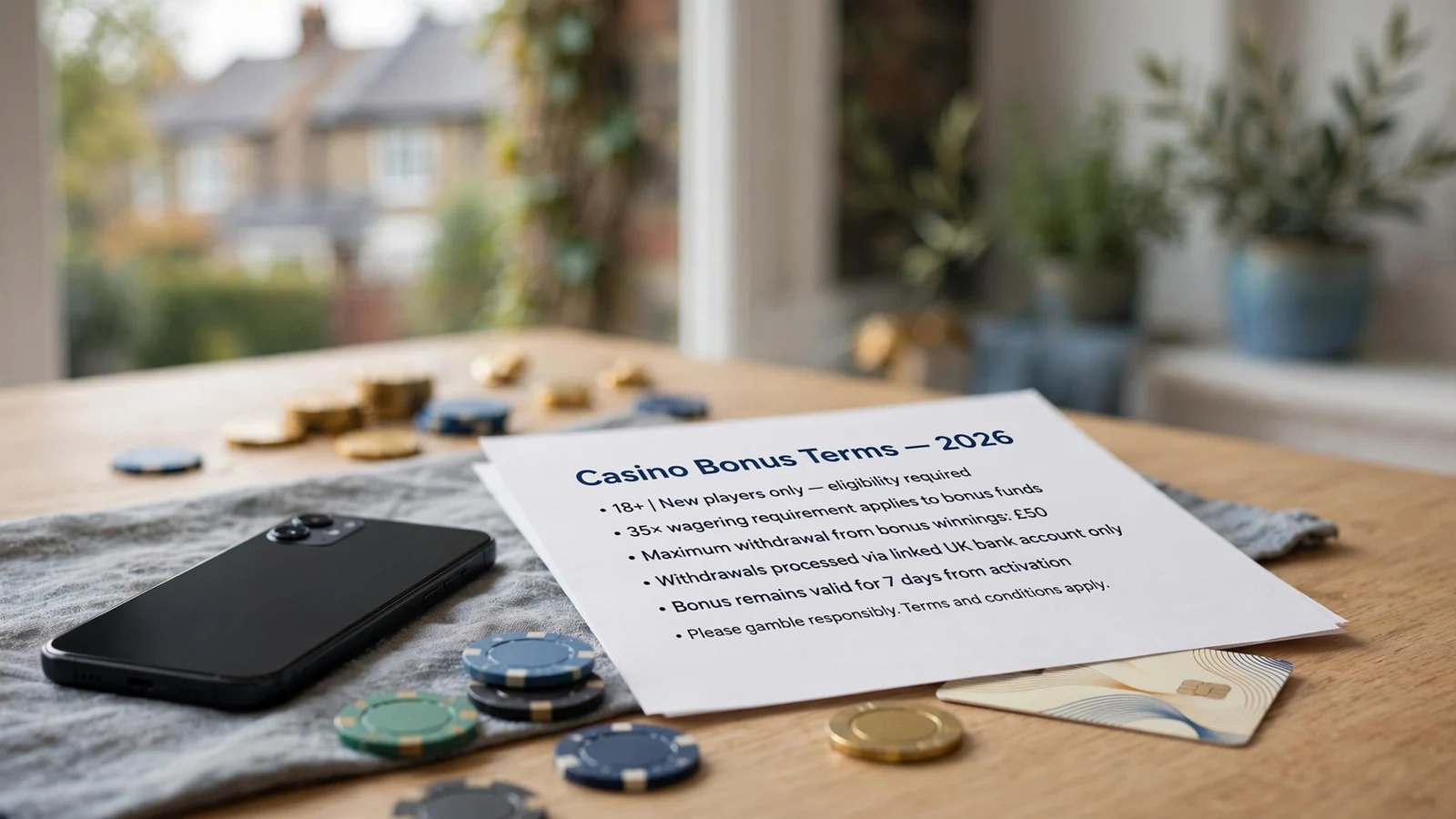
Keep the names consistent. The details on your casino account should match the details associated with the debit card or other payment route you use. If you have more than one account or card, pause before selecting one and check whose name is attached to it. A UK debit card casino may accept a card type in general, but that does not make someone else’s card an appropriate choice for your account.
It is also worth keeping your own account information current. If your name or personal details have changed, update the casino account through its proper process rather than entering a payment under details that no longer line up. The point is not to make the cashier look tidy; it is to avoid a basic ownership mismatch that can create unnecessary back-and-forth.
One named account, used consistently, is often the cleanest route for both depositing and withdrawing. I would not mix in a partner’s card or a relative’s payment account just because it is nearby or easier to reach. Even with permission, the names do not match. That can make it harder to establish that the payment belongs with your casino account.
This is practical housekeeping, not a promise that every transaction will go smoothly. A casino may still need to review an account, and payment methods can have their own conditions. But keeping the account and payment route in your name removes one avoidable complication. Fewer loose ends.
Before confirming a payment, take a moment to check the account name, the selected card or payment account, and the details saved with the casino. If something looks wrong, stop and correct it through the operator’s stated account process. Do not try to work around a mismatch by switching between other people’s payment methods.
Payment Consistency Check
- Check that the casino account name matches the debit card name
- Update personal details in the account if they have changed
- Verify that the payment route belongs to you and not a third party
- Ensure account details and payment route are aligned before confirming
For debit card casinos in the UK, the useful habit is simple: use a payment route that belongs to you, keep the account details aligned, and stick with that route where possible. It is not exciting advice. It is the kind that can save you from an avoidable support exchange later.
The real cost of paying by card or another method
The amount you enter in the cashier is not always the full cost of a deposit. I used to look only for a visible casino charge and assume that meant I knew what the payment would cost. That misses fees that can sit elsewhere in the chain.
A specialist casino payment review points to several possible sources: a charge from the casino, a payment-provider fee, a fee from your card issuer or bank, currency conversion, and network costs. Which ones apply depends on the route and the transaction. A fee may be shown before you confirm, but a bank or provider charge can be governed by its own terms, so check those too.
Currency is an easy one to overlook. If your casino account is not held in pounds sterling, the amount taken from your bank may be converted, and the exchange rate can include a spread. That cost is not always presented as a separate line. A specialist payment review warns that the spread can outweigh a visible flat fee; the useful comparison is the total cost, not just the fee that is easiest to spot.
The same caution applies when weighing a debit card against another payment method. One may have no casino charge but still involve a provider or bank cost. Another may show a flat charge while adding a less obvious conversion cost. Network fees can also matter, depending on the payment route. There is no method that is automatically cheapest for every player or every amount.
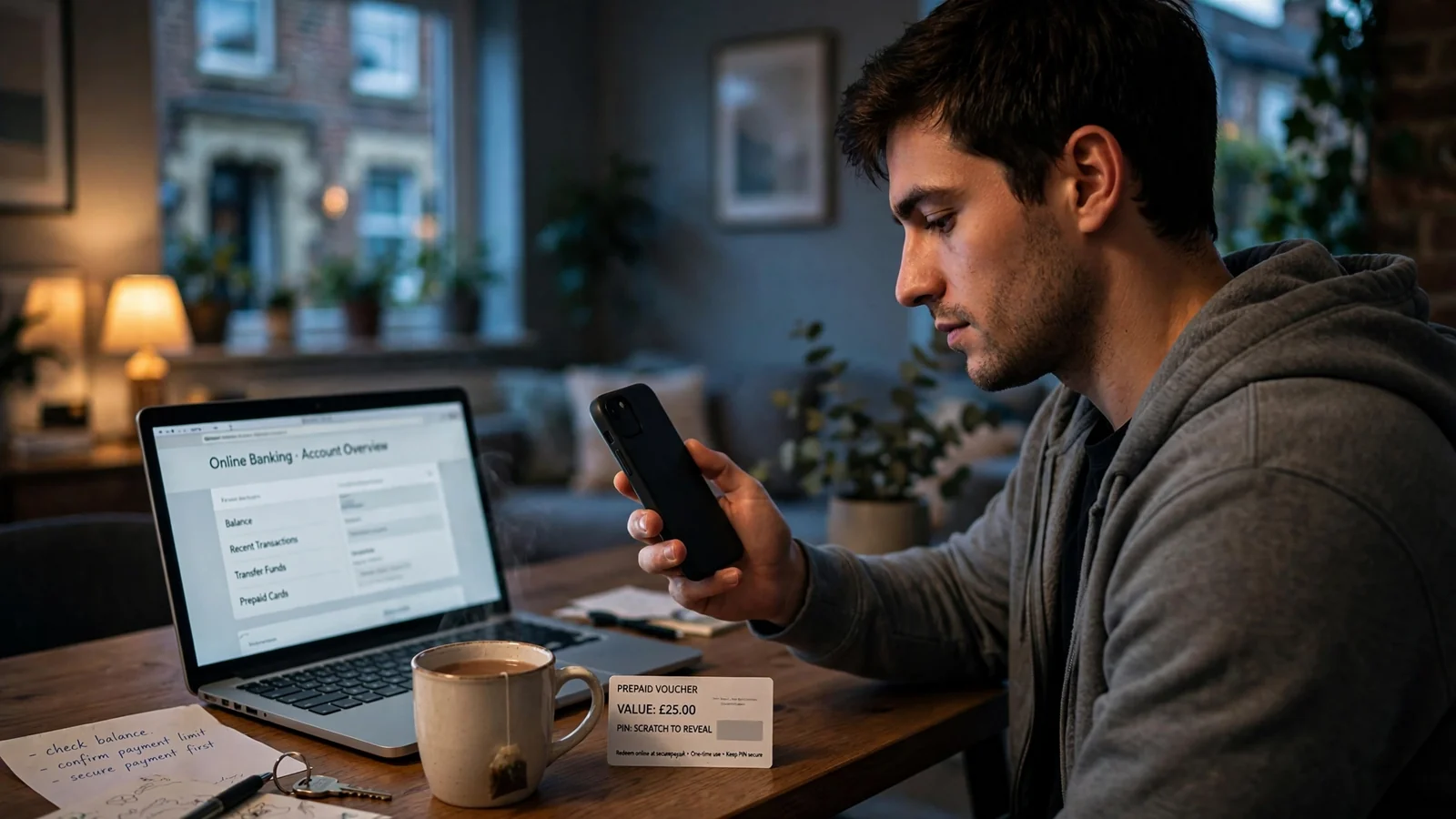
Before confirming, compare the cashier’s stated charge with the terms from your bank or payment provider, and check what currency the account uses. Then consider the amount you actually plan to deposit: a fee that seems minor on one transaction may affect the overall cost differently on another. Don’t compare labels alone. Compare the full route.
That’s the real arithmetic.
Using a debit card to fund online slots
A debit card does not pay for each spin directly. You use it to add funds to your casino account, then the balance in that account is used for slot play. That distinction sounds obvious, but I used to think of the card as part of the game itself. It is not. The casino’s cashier handles the payment; the slot draws from your account balance.
UK casinos commonly accept debit cards, including Visa and Mastercard. Once funds are in your balance, you can choose a slot and stake from what is available in the account. The card brand does not change how the game works, and having a card accepted does not mean every slot or payment feature is available under the same conditions.
There are rules for online slots in Britain that matter regardless of how you funded the account. Autoplay is banned, so spins cannot be set to run automatically. Each spin must also last at least 2.5 seconds. You have to start each one yourself. That can make play feel slower if you are used to rapid, repeated spins elsewhere. Not a card issue.
In the UK, online slots must have a minimum spin duration of 2.5 seconds, and the autoplay feature is banned.
I have found it useful to keep the two decisions separate: first, whether a payment route is suitable for funding the account; then, whether I want to play a particular slot and what stake I am comfortable with. A debit card is only the route into the balance. It does not make a game safer, change its outcome or remove the need to keep track of spending.
So when people talk about slots with a debit card, they generally mean slots played at a casino account funded by card—not games that charge the card spin by spin. That is the practical connection. The payment method and the slot are separate parts of the experience.
Check the cashier before relying on a payment method
A casino’s payment page can be out of date, and a card logo on a review page does not tell you whether your own card will work today. I would treat any list of casino sites with debit card options as a starting point, then check the cashier after signing in. A specialist review may list Visa or Mastercard, but current UK availability and eligibility can depend on the specific card product.

Look at the deposit and withdrawal options separately. A method appearing under deposits does not automatically mean it can receive withdrawals too. Check the cashier’s wording for both directions before you build your payment plan around it. If a method is deposit-only, that distinction should be clear; if the cashier does not explain the route, ask the operator rather than guessing.
Currency matters as well. Some casino pages state that GBP is supported, but confirm the account currency before making the first transaction. If the account is set to another currency, a conversion may be involved. That is easy to miss when the cashier displays the payment method you expected.
This check applies whether you are choosing a live casino or a site focused on other games: the cashier handles the account’s payment options, not a separate payment for each game. I once took a familiar card logo as a green light. It wasn’t.
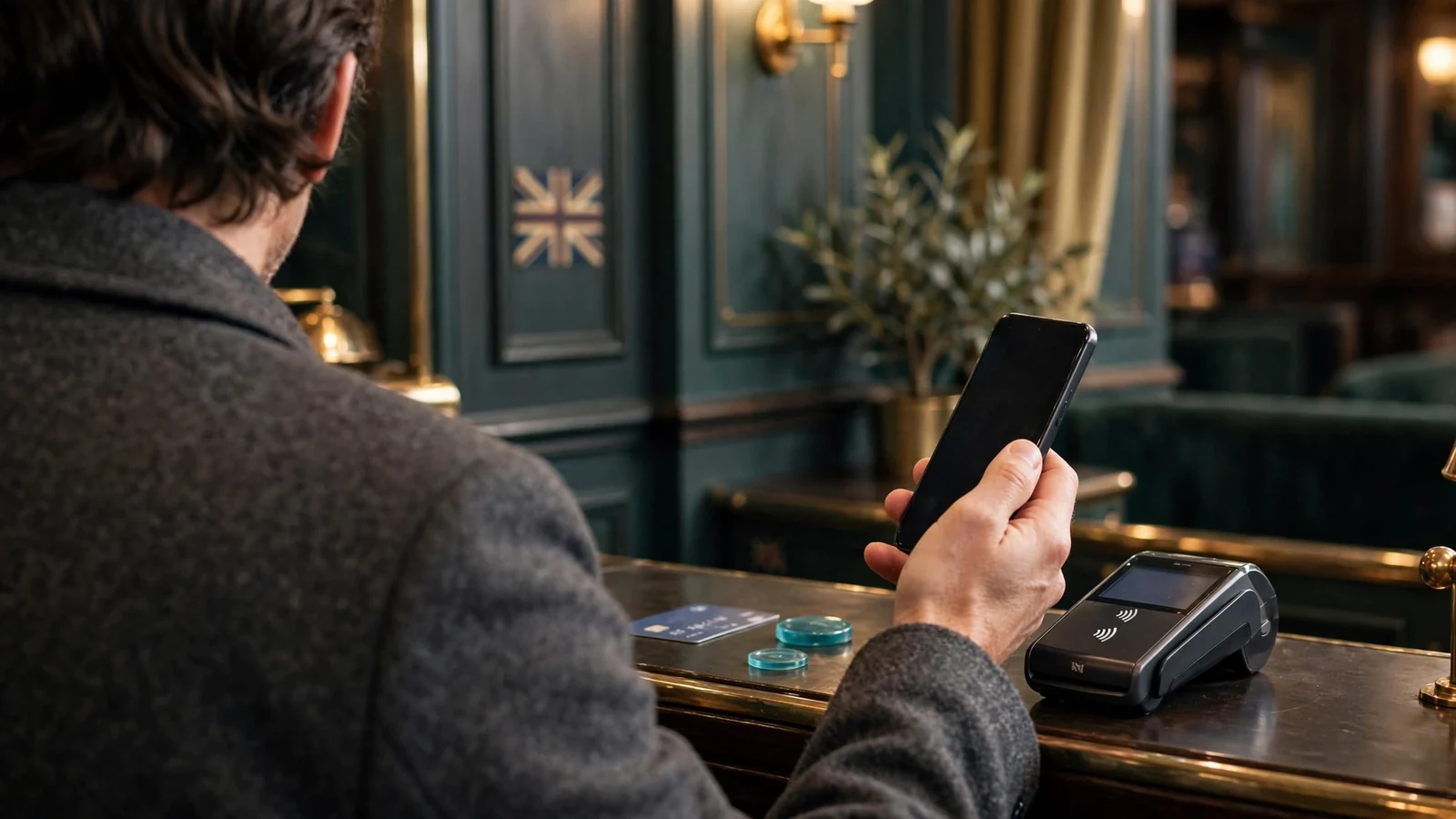
For a UK player, the useful question is not simply whether a casino accepts debit cards in general. Check whether the cashier currently offers your card for deposits, whether it supports withdrawals, and whether your account is in GBP. Then you know what the payment route actually allows, instead of relying on a broad claim about card acceptance.
Visa debit cards: acceptance and safer payment habits
Visa is among the debit-card brands commonly accepted by UK casinos, but that does not mean every Visa product will work at every cashier. A card may be issued on the Visa network and still be rejected for a particular transaction. Before relying on it, check that the cashier lists the method and that your specific card is eligible. If the option is missing or the payment fails, do not assume repeated attempts will fix it.
I’ve learned to check the details before typing anything in. Make sure you are selecting a debit card, not relying on the Visa name alone, and read any payment instructions shown by the casino. Keep your card and account details private; do not send card information through messages or to someone claiming they can process a deposit for you.
A safer, simpler route is to use a card and casino account that belong to the same customer. When the names or basic ownership details do not line up, a transaction can face avoidable checks or delays. That is not proof of wrongdoing, but it can turn a straightforward payment into an irritating back-and-forth. I would not borrow someone else’s card to get around a failed payment.
“Accepted” is not the same as “right for this card”. Confirm the exact payment option in the cashier, use your own eligible Visa debit card, and stop if the details or instructions do not look right. No shortcuts.
What is the fastest withdrawal method for UK casinos?
PayPal, open banking services and debit cards linked to fast payout systems are generally among the quickest options. The casino’s approval process and your verification status also affect how soon you receive the money.
Are Visa and Mastercard deposits definitely debit cards?
No. Visa and Mastercard identify the card network, not whether every card carrying the logo is eligible; check the casino cashier and your card’s eligibility.
Can I deposit in GBP?
Yes, GBP is supported, but check your account currency before depositing. If your balance is in another currency, conversion may affect the amount you pay.
Which method has the lowest fees?
There is no universally cheapest method. Compare casino and provider charges, bank or issuer fees, exchange-rate spreads and any network costs for the payment you plan to make.
Why must withdrawals return to the deposit method?
Returning funds to the original payment source is a common anti-fraud and anti-money-laundering control. Using a different route may require additional verification.
Do UK casino withdrawals require verification?
Verification may be needed, and first withdrawals can take longer while it is completed. Having a fully verified account can also affect payout speed.
What is the current minimum deposit?
Minimum deposits usually start at £10–£20, depending on the payment method.
Are fast casino withdrawals guaranteed?
No. Withdrawal speed depends on the casino’s internal approval process and whether your account is fully verified.
Published by the Reclamationstudios.org team.