£1 Minimum Deposit Casinos in the UK: What to Check
 Available in GB
A low cashier threshold may apply only to one payment route, while withdrawal limits, fees and bonus conditions shape the real cost of play.
Table of Contents
- What a £1 Minimum Deposit Actually Gets You
- How to Compare Low-Deposit Casinos Without Chasing a “Best” Claim
- How Online Casino Deposits Work at the £1 Level
- Real-Money Play on Your Phone: Check the Cash-Out Minimum Too
- The Catch with £1 Deposits and Casino Bonuses
- What a Pound Buys You on the Slots
- PayPal and Other Payment Costs: Check the Small Print
- Low Minimums Are Not the Same as Low-Cost Play
- A “New” £1 Casino Claim Needs Checking
- Pay by SMS: Why £1 Mobile Billing Is a Special Case
What a £1 Minimum Deposit Actually Gets You
A £1 cashier minimum sounds wonderfully clear: put in a pound and you can start. The catch is that it answers only one question — whether the cashier will accept a deposit of that size. It does not, by itself, tell you what else that pound qualifies you to do.
Some UK casinos do accept deposits as low as £1, but that is an unusual threshold rather than something to assume you will find everywhere. A specialist review reported six UK Gambling Commission-licensed casinos with a genuine £1 cashier minimum. Treat that as a snapshot, not a permanent roll call: payment options and account terms can change, and a number that was checked at one point is not a promise about what you will see when you visit.
The wording matters. “Minimum deposit” can sound like a broad promise about the whole account, when it may describe only the smallest amount accepted in one part of the cashier. If you see a pound mentioned in an advert or review, look for the precise condition attached to it. Is it the cashier minimum for a UK account, or does it apply only to a particular route? Is the figure describing a first deposit, or a later one? Does the cashier show the same amount before you confirm? Those details determine whether the claim is useful to you.
If you’re looking for a casino with a £1 minimum deposit, check the deposit terms before signing up; this list gives you one known detail about each operator. Use it as a starting point, not confirmation that a £1 deposit is available.
Payout speed: 1-3 business days Zombillion has a stated payout speed of 1–3 business days. Check its deposit terms to confirm whether you can deposit £1.
Payout speed: 1-3 business days Chanze has a stated payout speed of 1–3 business days. Check its deposit terms to confirm whether you can deposit £1.
Payout speed: 1-3 business days BeOnBet has a stated payout speed of 1–3 business days. Check its deposit terms to confirm whether you can deposit £1.
Payout speed: 1-3 business days EvoSpin has a stated payout speed of 1–3 business days. Check its deposit terms to confirm whether you can deposit £1.
Payout speed: 1-3 business days Amunbet has a stated payout speed of 1–3 business days. Check its deposit terms to confirm whether you can deposit £1.
Payout speed: 1-3 business days x3bet has a stated payout speed of 1–3 business days. Check its deposit terms to confirm whether you can deposit £1.
Payout speed: 1-3 business days SpinFormula has a stated payout speed of 1–3 business days. Check its deposit terms to confirm whether you can deposit £1.
Payout speed: 1-3 business days NightLuck has a stated payout speed of 1–3 business days. Check its deposit terms to confirm whether you can deposit £1.
Payout speed: 1-3 business days Britsino has a stated payout speed of 1–3 business days. Check its deposit terms to confirm whether you can deposit £1.
Payout speed: 1-3 business days Dieselwin has a stated payout speed of 1–3 business days. Check its deposit terms to confirm whether you can deposit £1.
I’ve made the mistake of treating a low number as if it meant the whole experience would be built around that number. It isn’t. A cashier accepting £1 does not mean every feature, offer or account condition starts at £1 too. Nor does it tell you whether you will want to add more later. The deposit threshold is one small piece of the terms, not a shortcut through them.
There is also a difference between a site letting you fund an account and a promotion treating that payment as eligible. A successful deposit can simply place money in your account. Any separate offer has its own qualifying terms, and the cashier minimum does not override them. The same principle applies to any other restriction or condition: seeing £1 accepted is not proof that the rest of the account works on a pound-by-pound basis. I’ll admit, I used to see the headline number and stop reading. Bad habit.
For a UK account, the operator must hold the appropriate UK Gambling Commission licence to offer online casino gambling legally. That is a separate question from whether the cashier accepts a particular amount. A £1 claim does not establish that an operator is licensed, and a licence does not establish that it will accept a £1 deposit. Check each point on its own rather than letting one attractive detail stand in for the other.

The same goes for access to the account. Operators must verify a customer’s age before allowing a deposit, and UK players must be at least 18. New customers must also be prompted to set a financial limit before their first deposit. These are part of the process around opening and funding an account; they are not reasons to assume that a low cashier minimum is automatically available without checks.
A sensible reading of “£1 minimum deposit” is therefore narrow: the operator says the cashier may accept that amount under the stated conditions. It does not guarantee that a promotional deal will apply, that every payment choice will share the same threshold, or that all other account terms match the low entry figure. The exact conditions belong to the operator’s current cashier and terms, not to the headline alone.
If you are only trying to find out whether a pound can get through the door, the answer is yes at some UK casinos. If you are asking what that pound unlocks, the answer is less sweeping: the cashier minimum tells you the smallest stated deposit, and little more until you check the conditions attached to the account. That distinction saves a lot of wishful reading. A small door, not a blank cheque.
Attention: A £1 cashier minimum only confirms the smallest amount the operator may accept; it does not guarantee that promotional deals apply or that all payment methods share the same threshold.
How to Compare Low-Deposit Casinos Without Chasing a “Best” Claim
“Best £1 casino” sounds like a useful verdict, but it can hide a narrow definition of best. A site may appear in a comparison because one listed cashier route accepts a pound, while the headline says nothing about whether the operator is licensed for the UK or whether that minimum is available to you. I’ve learned not to treat the badge as the answer. It is a reason to check the detail.
Start with the licence, not the deposit figure. An online casino serving British customers must hold a current UK Gambling Commission operating licence. That gives you a concrete test for whether a site is regulated for the UK market; a polished design or a “trusted” label does not do the same job. You can check an operator against the Commission’s public register. If a comparison calls a site legitimate but does not make its UK licensing status clear, the central point is still unresolved.
Then separate a verified cashier minimum from a general claim. A specialist review’s checked list identified just one UKGC-listed casino with a genuine £1 cashier minimum. That is a narrow finding from a particular comparison, not a permanent census of every operator. Still, it tells you why broad lists of “top” or “best” pound-deposit casinos deserve a second look: the headline may make a rare feature sound widespread. A result can be outdated, use a different definition of minimum, or count a payment route that is not available to every customer.
I’d also look for evidence that the figure was checked at the operator, rather than repeated from another list. Does the page distinguish the cashier’s stated minimum from a promotional minimum or a claim about what a player can deposit? Is it clear what was verified and when? A confident sentence with no explanation is not stronger evidence just because it is written in a table.
The next comparison is whether the site’s claims match the thing you actually want. If your priority is a small starting deposit, a £1 figure may matter. If your priority is a regulated account, confirm the UKGC licence. If you are comparing operators more broadly, weigh those criteria separately instead of letting one unusually low number decide everything. A low threshold does not, on its own, tell you whether an operator is suitable for you.
“Safe” is another word I read carefully. It should not be treated as a promise that nothing can go wrong. For a UK player, the useful, checkable point is whether the operator holds the relevant UK licence and is subject to the UK Gambling Commission’s rules. That is different from an affiliate page calling a casino safe without showing what the claim rests on. I want the basis, not the adjective.
- Verify the operator holds a current UK Gambling Commission licence
- Check the specific cashier minimum for your chosen payment method
- Use the Commission’s public register to test regulation
- Set a financial limit before your first deposit
- Treat a “best casino” badge as a guarantee of quality
- Rely on a general “from £1” label without verification
- Assume a low deposit minimum means the site is safe
- Mistake a new site’s launch for proof of UK licensing
There are practical signs of a careful comparison, too. It should state its criteria plainly, avoid turning a limited check into a sweeping market claim, and make it possible to tell which operator information was verified. A list that mixes licensed and unlicensed sites without clearly distinguishing them is not helping you compare British options. Nor is a page that treats the word “new” as proof of quality. Newness and a low cashier minimum are separate claims; neither establishes the other.
You can use a simple checklist while reading:
- Is the operator listed with a current UK Gambling Commission licence?
- Does the page say that the cashier minimum itself is £1, rather than relying on a vague “from £1” label?
- Does it explain the scope of its check, rather than implying that one review covers every casino?
- Are the comparison criteria clear enough for you to judge the claim without accepting the writer’s “best” label?
I used to see a tiny minimum and mentally fill in the rest: surely the casino had been checked, surely the comparison meant the amount was available in the way I expected. That was me doing the writer’s work for them. Now I treat the figure as one data point and verify the licence independently. Boring, but useful.
The honest result may be that there is no single winner for you. One site can meet the narrow £1 condition, while another may be the better fit under a different standard. A comparison should help you see those distinctions, not blur them into a medal. With a feature this rare, “best” is often less informative than the exact claim and the evidence behind it.
Before you open an account, set a financial limit you can afford to lose. UK-licensed operators must prompt new customers to set a limit before their first deposit and provide account-level controls, but deciding your own boundary is still worth doing before the excitement starts. You must also be at least 18 to gamble online in the UK. A low entry point does not make gambling risk-free.

That’s the comparison. Not a crown. Just checks.
How Online Casino Deposits Work at the £1 Level
The cashier minimum is set by the casino, not by the amount you happen to have in your account or the number you type into the deposit box. That distinction matters when you’re looking for an online casino with a £1 minimum deposit in the UK: a cashier may accept that amount for one route while setting a higher floor for another.
At many operators, the minimum is the same across the available payment methods. Some casinos, though, set a higher minimum for a bank transfer than for a card or e-wallet. So don’t assume the first figure you spot applies to every option in the cashier. The amount can depend on which method you select.
I used to read a low figure on a page and treat it as a promise about the whole deposit process. It isn’t. The number that matters is the minimum displayed in the operator’s own cashier for the method you intend to use. If the cashier shows different options, check each one before deciding what amount to enter. Small detail. Important one.
Some casinos set a higher minimum for bank transfers than for cards or e-wallets, meaning the minimum amount can depend on which method you select.
The cashier sets the floor
A minimum deposit is a rule attached to the casino account. The cashier applies it when you make a deposit, and it may prevent you from submitting an amount below the stated threshold. If £1 is accepted, that tells you the operator permits that deposit amount under the conditions shown there. It does not tell you that the same minimum applies to every method.
Think of the cashier as the final checkpoint for the transaction details. A page elsewhere may describe a casino as having a £1 minimum, but the cashier is where you can see whether that figure matches the method you have chosen. If a bank transfer has a higher threshold, for instance, the cashier should make that difference clear before you confirm the deposit.
The reverse is true too: seeing a method listed does not establish its minimum. You need to select it and read the amount displayed. Don’t start a transaction just to find out what the threshold is; look for the minimum before confirming anything. If the information is unclear, pause and ask the operator rather than guessing.
What to check before confirming
Once you are signed in, look for the deposit area and note the payment method selected. Read the minimum shown alongside the amount field, then check that the amount you plan to enter meets it. If the cashier changes its displayed minimum when you switch methods, use the figure shown for the option you have actually chosen.

Also check that you are on the operator’s own site and using its UK-facing account. The relevant terms should describe the cashier minimum for that account, not a figure copied from a page aimed at a different market. A familiar-looking headline can be less useful than a plain line of text inside the cashier.
There are other checks before a real-money deposit. UK-licensed operators must verify a customer’s age before allowing deposits, and new customers must be prompted to set a financial limit before their first deposit. You should be able to set that limit before going ahead. These are part of the account process, not optional extras to work around. If the account is not ready for a deposit, stop there.
For UK players, online gambling is legal at sites holding a UK Gambling Commission licence. A deposit page should belong to an operator serving the British market under the relevant licence. That does not change the cashier minimum, but it does establish whether the account is being offered within the UK regulatory framework.
Why one headline can mislead
The phrase “£1 minimum deposit” can be accurate and still leave a practical question unanswered: £1 using which option? Because an operator may use one minimum across most methods but set a higher one for bank transfers, the headline alone does not settle the details. Read it as a starting point, not a guarantee about every button in the cashier.
If the minimum shown is higher than you expected, don’t keep changing the amount or selecting options at random. Check the operator’s explanation of its deposit rules and confirm which method the stated £1 threshold applies to. The cashier’s own terms should resolve the mismatch; if they do not, contact customer support before making a deposit.
Confirming the Deposit
Sign in to your account, go to the deposit area, and choose your preferred payment method.
Read the minimum amount displayed alongside the amount field for that specific method.
Ensure you have set a financial limit and that your intended deposit meets the cashier’s requirement before confirming.
I find it helps to separate two things: the casino’s advertised minimum and the minimum attached to the selected payment method. They may match, and often do, but they are not automatically identical. That’s the whole mechanics of a £1 deposit in a nutshell: the operator sets the floor, the cashier displays how it applies, and you should confirm the amount before authorising the transaction. No guessing.
Real-Money Play on Your Phone: Check the Cash-Out Minimum Too
A £1 deposit can be real money in your casino account without making it easy to get money back out. The cashier’s deposit minimum and its withdrawal minimum are separate rules. I used to focus on the first number because it was right there on the payment screen. The cash-out terms were the part I nearly missed.
That difference matters if you’re playing on your phone with a small balance. A debit card or some e-wallets may let you deposit £1, but that does not tell you how much you must have available before the casino will process a withdrawal. One specialist review reports withdrawal minimums ranging from £1 to £5. Treat that as a detail to verify for the account you’re considering, not a promise that every mobile casino will let you cash out at the lower end.
The balance on screen is not the whole story
When you check a real-money £1 minimum deposit casino in the UK, look at the withdrawal rules as well as the amount accepted at deposit. On a small balance, even a modest gap between those thresholds can change what the pound gets you: you may be able to play, but still have to leave funds in the account until you meet the cash-out minimum.

That is not the same as losing the money, and it does not mean every £1 deposit creates a withdrawal problem. It means the two figures answer different questions. One tells you what you can put in. The other tells you the minimum amount the operator will let you request back. A small deposit is not automatically a small, complete trip through the account.
Check the withdrawal terms on your phone
Mobile pages can make it tempting to tap through quickly. Before depositing, find the cashier or account terms and look specifically for the minimum withdrawal amount. Don’t assume that a low minimum shown beside a card or e-wallet also applies when you take money out; read the withdrawal rule itself.
I’d also check whether the rule is described for your account and chosen method, rather than relying on a general line about the casino. If the wording is unclear, pause before sending money. It’s easier to understand the cash-out conditions before a balance is sitting there waiting.
A £1 minimum deposit online casino may sound like a tidy way to try real-money play without committing much. But the deposit figure alone cannot tell you whether you can withdraw a small win straight away. That depends on the separate cash-out threshold, and the details can differ between operators.
Withdrawal Minimums
Depositing £1 does not guarantee you can withdraw it; always check the withdrawal minimum, as it may be higher than your deposit.
Think about the full journey
For a £1 minimum deposit mobile casino, the useful question is not only whether the cashier accepts a pound on your phone. It is whether you understand what happens if you want to stop and withdraw. Check the minimum amount, make sure you know where the withdrawal option is, and keep the terms available to refer back to.
This is the part I’d put beside the deposit number, not underneath it in tiny print. If the withdrawal minimum is above the amount you expect to have, decide whether that setup still suits you before playing. Don’t deposit more just to make a threshold feel reachable; only use money you have already set aside as affordable to lose.
The small deposit may work. The exit matters too.
The Catch with £1 Deposits and Casino Bonuses
A £1 cashier minimum does not mean a £1 qualifying deposit. I learnt to separate those two things the annoying way: the money can reach your balance while the welcome offer stays locked. Specialist reviews have described welcome deals with qualifying deposits in the £5–£10 range, and some UK casinos exclude their lowest deposit bracket from promotions altogether. So if you put in a pound, assume you are making a cash deposit, not buying your way into a bonus.

Read the offer’s qualifying-deposit line before you opt in. It may set a threshold above the cashier minimum, or exclude a particular deposit bracket. A site can accept your pound perfectly well and still say it does not count towards the promotion. The distinction is small on the page. Less small when you expected extra funds.
“No deposit bonus” is a different claim again. It refers to an offer that does not require a qualifying deposit, not to a casino whose cashier accepts a pound. Check whether the offer is actually available to you and what must happen before anything can be withdrawn. A label alone tells you very little.
The rules around wagering have also changed. From 19 January 2026, the UK Gambling Commission’s cap means bonus wagering requirements cannot exceed 10 times the bonus funds. That is the current ceiling, not a promise that every offer has no wagering or uses the full allowance. Older specialist reviews describe free-spin winnings with requirements of 30 to 65 times the amount won; those figures should not be read as a current permitted offer. Check the live terms and how they define the amount to be wagered.
That wording matters. A requirement may apply to the bonus balance, or to winnings generated by free spins, rather than to your original deposit. The terms can also specify which games count and whether a maximum withdrawal applies. I used to skim straight to the headline figure. Bad habit. The conditions are the offer.
Caution: A £1 cashier minimum does not mean a £1 qualifying deposit; many welcome offers require a higher amount, often in the £5–£10 range.
For a £1 deposit, ask yourself what you want from it. If you simply want to test the cashier and play with your own balance, you may not need a promotion at all. If the bonus is the point, check the qualifying deposit and the full terms first; adding money before finding out can leave you with neither the offer you expected nor a useful reason to deposit more.
Ignore wording that suggests a bonus is guaranteed just because the account takes £1. And treat “not on GamStop” as a warning label, not a bonus feature: operators serving the British market must hold the relevant UK Gambling Commission licence. Before any first deposit, set a financial limit you can stick to. A promotion is not a reason to raise it.
What a Pound Buys You on the Slots
A £1 balance can look like a neat way to have a go at the slots without committing much. The catch is that the balance is not a measure of how long you will play; the stake you choose decides how quickly it shrinks. I learned that the hard way. A small deposit can still disappear at a pace that feels anything but small.
Many slots let you stake between 10p and 20p per spin. On that simple arithmetic, a pound covers ten spins at 10p each, or five at 20p, assuming no winnings are returned. That is a quick session, not an evening’s entertainment. The actual stake options vary by game, so check the amount shown on the game screen before you press spin.

It is easy to focus on the minimum deposit and miss the cost of each turn. A cashier may accept a pound, but that does not mean every slot offers a stake that stretches it very far. If the game you fancy starts above the amount you planned to stake, choose another game or leave it. Don’t keep increasing the bet just to get started.
I used to treat each spin as a separate little decision and forget that the balance was being spent one turn at a time. That made it feel as if I had plenty left, right up until the account showed otherwise. With a small deposit, a few choices at the higher end of the available stake range can use up most of the balance before you have much time to settle into the game.
A win can change the balance, of course, but it is not a reason to assume the pound will last longer. You might win, lose, or see the balance move back and forth. The stake is the amount you put at risk on each spin, not a forecast of what the game will return. I would decide how much I was prepared to spend before opening a slot, then stop when that amount was gone. Set a financial limit before your first deposit, and keep it separate from any hope of winning.
Also look at the game controls rather than relying on memory. In Britain, online slot spins must last at least two and a half seconds, and autoplay is not allowed. That still does not make a small balance last: individual decisions can add up quickly, especially when you choose a larger stake.
In the UK, online slot spins must last at least two and a half seconds, and autoplay is not permitted.
So, if you are comparing £1 minimum-deposit slot sites in the UK, treat the pound as a small, fixed play budget. Check the stake options, choose one you can afford, and be comfortable with the possibility that the balance will be used up quickly. No magic stretch.
PayPal and Other Payment Costs: Check the Small Print
Searching for a PayPal casino with a £1 minimum deposit makes sense: the cashier may list PayPal, while the minimum shown elsewhere applies to a different payment route. But seeing PayPal as an option does not prove that it will accept a £1 deposit. I’d check the amount shown in the cashier after selecting the method, before confirming anything.
There is another detail easy to miss: the payment itself may cost money. A specialist review reported that some payment providers charge flat transaction fees of £1 to £3. That is not a fee to assume applies to every provider, so check the operator’s and provider’s terms. Still, if a fee is taken from a small transaction, it can eat into a meaningful share of what you meant to deposit. Small deposit, noticeable bite.
I used to focus on the minimum and treat the payment screen as a formality. That is backwards. Before paying, look for any fee, whether the amount entered is the amount credited, and whether the cashier’s minimum changes when you switch methods. If the fee is unclear, pause rather than guessing.
For PayPal and other e-wallets, also consider how the wallet is funded. UK gambling deposits cannot be made with credit cards, including credit-card funds routed through a money service business; e-wallets used for gambling must not allow credit-card funds to be used. Use an eligible debit-funded wallet or another permitted method, and check the funding rules rather than assuming the wallet balance is acceptable.
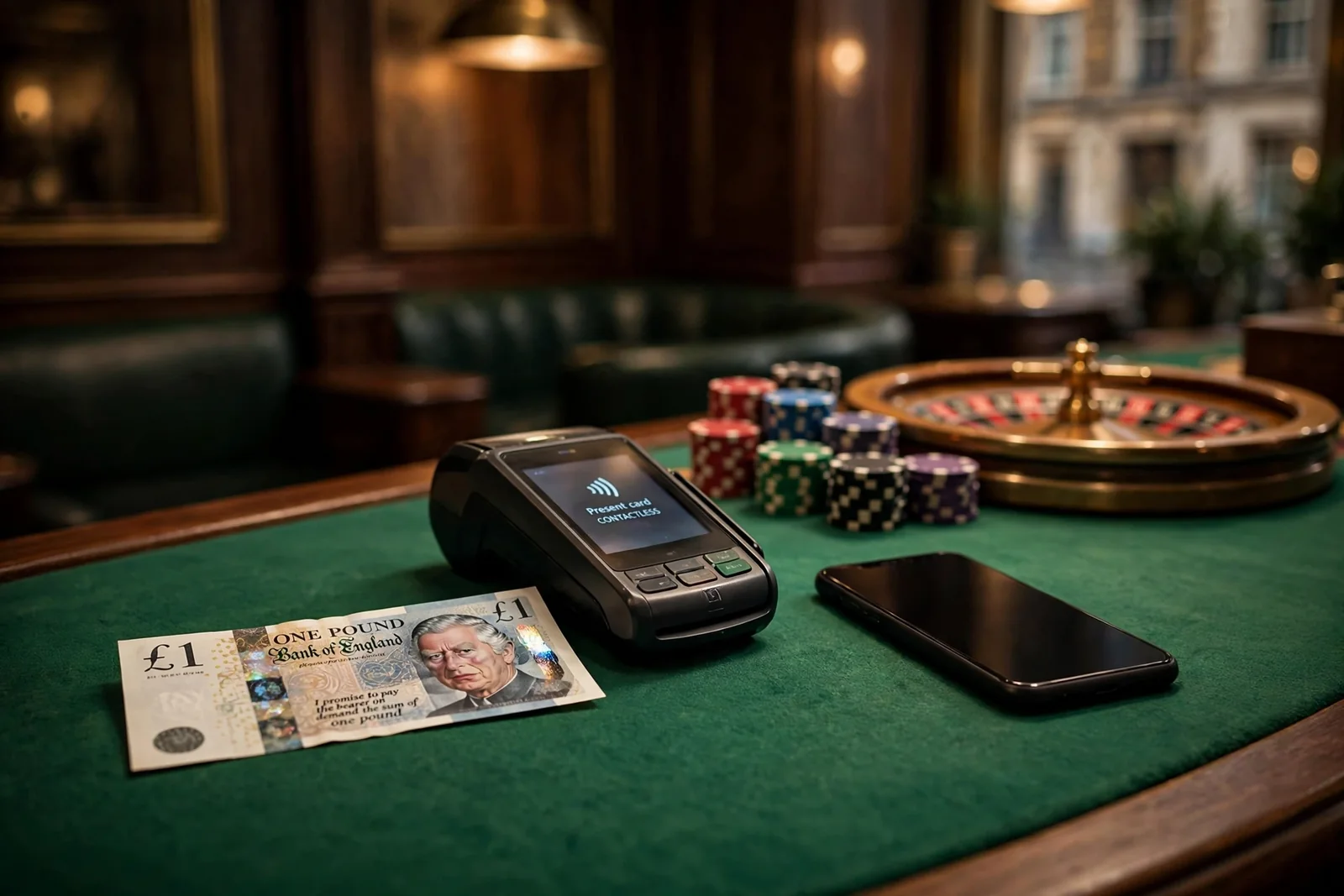
A £1 cashier minimum only answers one question: what amount the operator will accept through that route. It does not settle whether PayPal is available to you, whether a fee applies, or how much will actually reach the casino balance. I’d verify those details on the live cashier and payment terms each time, since options can vary. No guesswork.
Low Minimums Are Not the Same as Low-Cost Play
A £1 cashier minimum looks like the cheapest way in, but it only tells you how little the operator may accept in one deposit. It doesn’t tell you whether another route would be simpler or what the transaction might cost.
A specialist review of UK casinos accepting direct banking puts the commonly listed minimum at £10, with some operators setting it at £5 and others at £20. Treat that as a snapshot, not a rule for every casino: the cashier terms are what matter for the account you’re using.
I used to fixate on the smallest number on a payment page and call it a bargain. That misses the difference between the amount you can deposit and the cost of making the deposit. A separate specialist review reports that some payment providers charge a flat fee of £1 to £3. On a £1 transaction, a fee at that level could swallow the deposit; on a larger one, the same charge takes a smaller bite. Check the provider’s terms before confirming rather than assuming the casino’s minimum is the whole cost.
Key Comparison Points
- Compare the cashier minimum against any potential payment provider fees
- Verify UKGC licensing independently of deposit claims
- Distinguish between the cashier minimum and the promotional qualifying deposit
- Check both deposit and withdrawal thresholds before funding an account
The £10 direct-banking figure may be less tempting than a £1 option, but a low threshold isn’t automatically better value if the transaction itself carries a charge. Equally, a higher minimum doesn’t prove that a payment is expensive; it just means you need to commit more money at once.
I now compare the cashier minimum with any stated payment fee, then decide whether the amount makes sense for me. No magic number. Set a spending limit before depositing, and don’t raise it just to make a payment feel worthwhile.
A “New” £1 Casino Claim Needs Checking
A page calling itself a “new £1 casino” can make two separate claims sound like one: that the operator is new, and that its cashier accepts a £1 deposit. Neither follows from the wording alone. I’ve learned not to treat a fresh-looking headline as proof that the minimum applies to a UK account.
The stray “1016” wording is no clearer. It may be a typo or a label copied from somewhere else; by itself, it tells you nothing reliable about when a casino launched or whether its cashier still accepts a pound. Check the actual deposit screen after selecting the UK account, and look for the minimum shown beside the payment method you intend to use. A site-wide headline can conceal different conditions.

One specialist review’s checked list identified NetBet as the only UKGC-listed casino in that set with a genuine £1 cashier minimum. That is a finding about the review’s snapshot, not a permanent statement about every operator on the market. I would verify the operator’s current UK Gambling Commission status and the cashier terms before relying on it. No headline is worth treating as confirmation.
Also keep “new” separate from “eligible”: a recently launched site is not automatically licensed to serve British players, and a £1 claim does not establish that the account is a UK one. For real-money play in Great Britain, the operator must hold the relevant UK Gambling Commission licence. Check the actual terms, not the badge in an advert. Short version: verify both.
Pay by SMS: Why £1 Mobile Billing Is a Special Case
A £1 cashier minimum may be tied to a particular payment route, rather than offered across every option on a casino’s deposit page. A specialist review describes the lowest tier as rare and associated with mobile-billing services such as Boku or Payforit. That is a narrower claim than saying you can deposit a pound by SMS at any UK casino.
I used to read “£1 minimum” as if it applied to the whole cashier. It may not. The amount shown beside one method does not tell you what another method will accept, so open the cashier and check the minimum displayed for the specific mobile-billing option. If that option is absent, the headline figure does not make it available.

There is another distinction worth keeping in mind: a mobile-billing route is not automatically the same as a text message that completes a deposit. Follow the operator’s instructions and read the payment terms before confirming anything. Make sure you are on a UK-licensed site; operators serving the British market need the relevant UK Gambling Commission licence. You must also be at least 18, and set a financial limit before your first deposit.
The practical point is simple: £1 is the lowest tier, but it is unusual and may depend on a specific method. Don’t assume a card or another cashier option will share that minimum just because mobile billing shows it. Check first. Then decide.
What is the best £1 minimum deposit casino in the UK?
NetBet is the only UKGC-listed casino identified with a genuine £1 cashier minimum. Check its current cashier and terms to confirm the minimum still applies to your account and chosen payment method.
Can I withdraw winnings from a £1 deposit?
Yes, but a £1 deposit does not guarantee you can withdraw just £1: many UK casinos set withdrawal minimums of £10 to £20, while some allow withdrawals from £1 to £5. Check the operator’s withdrawal terms before depositing.
Which payment methods usually accept £1 deposits?
Debit cards and some e-wallets can support £1 deposits. The minimum may vary by payment route, so check the amount shown in the casino cashier.
What is the lowest deposit available at UKGC-licensed casinos?
The lowest deposit tier is £1, but it is rare and may be limited to specific payment methods. NetBet is the only UKGC-listed casino identified with a genuine £1 cashier minimum.
What is the maximum wagering requirement in Great Britain?
Since 19 January 2026, gambling incentives in Great Britain cannot require more than 10x wagering of bonus funds.
Which payment method is best for low-deposit casino players?
Debit cards are a practical option: they are accepted by almost all UK casinos and support low deposits. Check the cashier for the minimum on your account, as some payment routes may have different limits.
Published by the Reclamationstudios.org team.