Online casinos that accept SMS deposits: how it works
 Available in GB
SMS casino deposits use a mobile account for billing, so payment availability, account limits and bonus terms all matter.
Table of Contents
- What “pay by SMS” actually means at the cashier
- Why fewer UK casinos still take Boku
- The deposit flow: from cashier to SMS code
- Before you deposit, check the licence—not the sales pitch
- Small charges, tight limits: what your phone account allows
- Your mobile balance can be the real deposit limit
- Bonuses and SMS deposits: read the terms before you tap
- Why “top SMS casino” claims can go stale
- If Boku is missing, consider a different payment route
- Using a phone deposit for slots: know what it does—and doesn’t—cover
What “pay by SMS” actually means at the cashier
“Pay by SMS” sounds as though you are sending a text with a payment instruction. At a casino cashier, the phrase usually describes something broader: a deposit is billed through your mobile account, with a text message used as part of confirming it. Boku is one payment method associated with this arrangement. The money does not come straight from a debit card; it is charged to your mobile phone bill or taken from prepaid credit.
The wording can be confusing because “SMS” describes the message, not necessarily where the money comes from. You are not paying the casino out of a balance stored in your text messages. Instead, the mobile network is involved in billing the payment. That is why you need a mobile phone and an eligible mobile account for this sort of casino deposit.
You may also see the term Pay by Phone. That is a useful way to think about it: the payment is connected to your phone account, while a text may help verify that you authorised it. “Pay by SMS” and “Pay by Phone” are often used loosely in descriptions, but the important distinction is the funding source. With Boku, it is your mobile account.
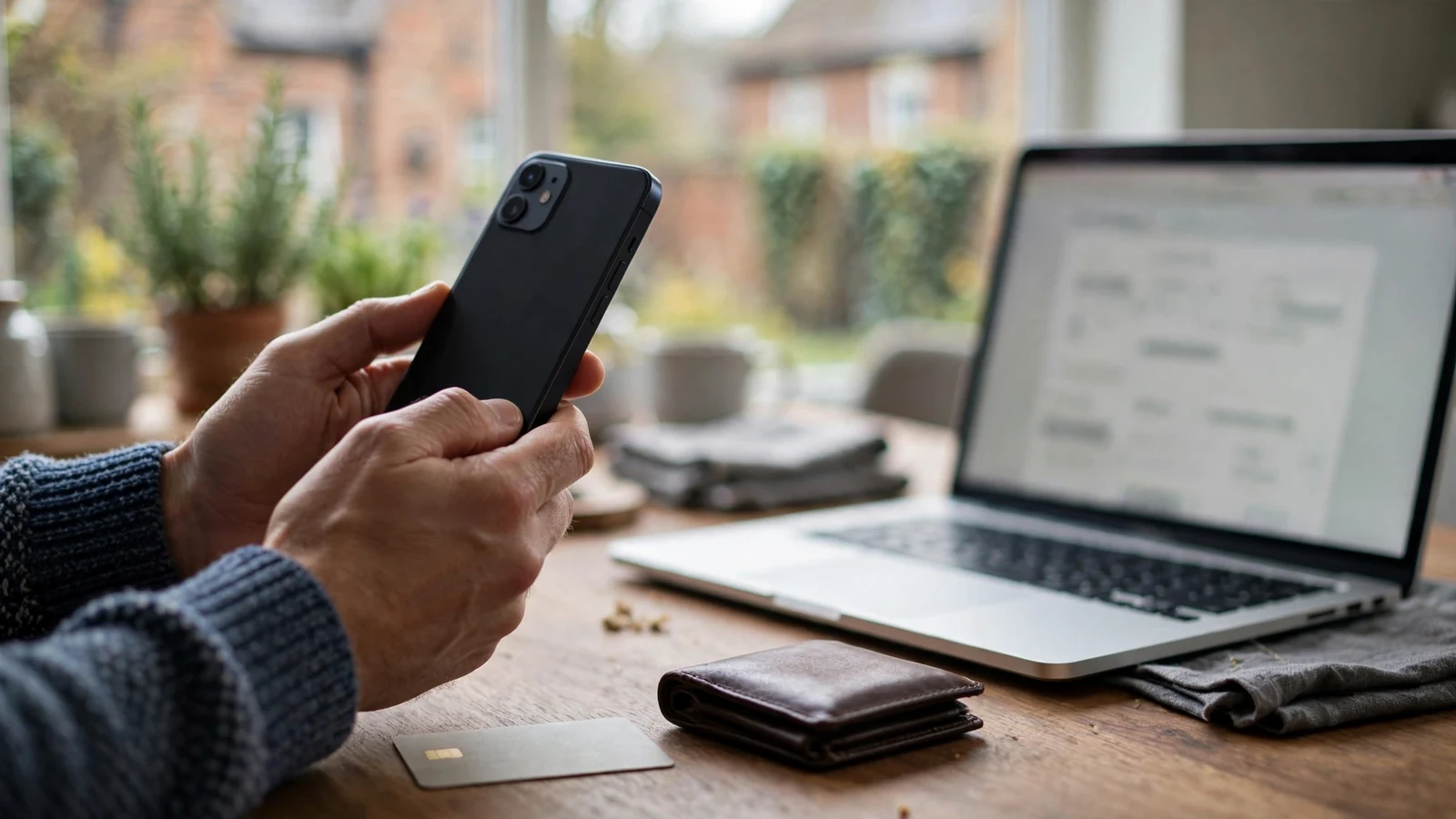
I used to read payment labels as if they all meant the same thing. They do not. A card payment takes funds from a card account; a phone-billed deposit goes through the mobile account. That difference matters before you pick an option, because your phone plan determines how the charge is handled.
Monthly bill or PAYG credit
If you have a monthly mobile contract, a Boku deposit can be added to your phone bill. The casino payment is then reflected through your mobile account rather than being taken directly from your bank account at the moment you deposit. It is still a real charge, even if you do not see it listed as a card transaction.
With PAYG, there is no monthly bill to add the charge to. The payment is deducted from the prepaid credit available on your phone. If that balance cannot cover the deposit, the payment may be declined. In other words, the casino cashier can offer the payment method, but your mobile account still has to be able to fund it.
That distinction is easy to miss when you are focused on the casino screen. I have learned to check which kind of mobile account I am using before treating the displayed payment option as ready to go. A contract customer and a PAYG customer may see a similar process, but the charge lands differently: on the bill in one case, against existing credit in the other.
What the text does—and does not—mean
An SMS confirmation is part of the payment process, not a separate source of money. It helps connect the transaction to the phone number being used. That can make “pay by SMS” sound more literal than it is: the text is involved, but the casino deposit itself is charged through the mobile account.
This also explains why a phone-based payment is not just another name for a bank transfer. You are relying on your mobile provider’s billing arrangement, not entering bank details into the casino cashier. Boku lets users pay without a card or bank account, but that does not make the deposit free or detached from your usual phone costs. It is still an amount you are responsible for paying, either through the bill or from prepaid credit.
Pay by Phone and Fonix are supported by EE, O2, Vodafone and Three. That tells you those networks support these payment services; it does not mean every casino cashier will show every provider or payment option. The cashier’s available methods and your own mobile account both matter.
I find the simplest way to read the label is this: the casino is asking to charge a deposit to your phone account, and the text helps confirm the payment. It is not a text-message wallet, and it is not a card transaction disguised with different wording.
One small distinction.
Why fewer UK casinos still take Boku
Finding an online casino that accepts Pay by SMS through Boku has become less straightforward. A small number of UKGC-licensed casinos still take Boku deposits, but the group has been shrinking since 2023. The important distinction is that this change does not come from a UK Gambling Commission rule that names Boku and bans it. Individual operators have chosen to drop the payment option because they see compliance risk.
The reduction in casinos accepting Boku is due to individual operators’ decisions regarding compliance risk, not a specific ban imposed by the UK Gambling Commission.
I used to read a missing cashier option as a sign that the regulator had prohibited it. That was too simple. A payment method can become harder to find because operators decide they would rather not support it, even when no specific ban has been imposed. In this case, the decisions belong to the casinos, not to a Boku-specific UKGC prohibition.
That matters if you are comparing casinos that accept Pay by SMS in the UK. A payment method’s history at one operator does not tell you what another operator is allowed or willing to offer. One casino may remove Boku while another continues to accept it. Availability is an operator choice, and it can change.
A commercial decision, not a named ban
The phrase “banned by the UKGC” sounds tidy, but it does not describe what happened to Boku. The Commission did not introduce a rule specifically forbidding casinos from taking Boku deposits. Instead, operators have withdrawn the option in response to compliance concerns.
That distinction is worth keeping clear. It avoids blaming a regulator for a decision made by individual businesses, and it also avoids assuming that every casino has reached the same conclusion. The fact that some UKGC-licensed casinos still accept Boku is consistent with that picture: the option has not disappeared under a blanket Boku ban, even though fewer operators appear to offer it.
I would not treat the cashier as a permanent menu. A casino can change which payment methods it supports, and an old mention of Boku may no longer reflect what you will find when you check. “Still available” is not the same as guaranteed to remain available.
Why the option can disappear
The verified reason for operators stepping away is compliance risk. That is the broad explanation; it does not mean every casino has publicly given the same account, or that there is one single event behind each removal. Operators make their own decisions about whether a payment option is suitable for their business and regulatory responsibilities.
It is tempting to fill in the gaps with a more dramatic story: a new law, a regulator’s warning, or a universal ban. But none of those claims follows from the fact that casinos have been dropping Boku. The careful version is less dramatic and more useful: operators have judged the compliance risk differently, and some have stopped offering the method.
That can leave a confusing impression. You may see an older page describing a casino that accepts Pay by SMS, then find no Boku option when you visit its cashier. The page may be out of date, or the operator may have changed its supported methods. Either way, the difference does not establish that the UKGC has banned Boku.
What “few” means in practice
There are still UKGC-licensed casinos that accept Boku deposits, but the number is small and the list has been contracting since 2023. That makes broad claims about online casinos that accept SMS deposits unreliable unless they are checked against the operator’s current cashier. A casino mentioned in an old recommendation may no longer offer direct Boku payments.
Attention: Do not rely on old recommendations or lists of “top SMS casinos,” as operators frequently change their supported payment methods.
I would be cautious with wording such as “all” or “every” when someone describes the market. The situation is not a single uniform policy across casinos. Some operators have removed Boku; a small number continue to accept it. That is the extent of what the overall trend tells you. It does not reveal why one specific casino kept the method while another dropped it.
There is also a difference between a casino accepting Pay by SMS in general and accepting Boku in particular. The broad label can cover different arrangements, while Boku is one specific provider. If you are trying to use Boku, a reference to phone payments alone does not necessarily confirm that the casino still supports Boku.
No neat rule explains every cashier. That is the annoying part. For me, the useful takeaway is not to treat Boku’s reduced availability as proof of a UKGC ban, nor to assume an old listing is current. Operators have been making their own compliance decisions, and the result is a smaller, changing set of casinos that still accept the method.
The deposit flow: from cashier to SMS code
A Pay by Phone deposit is a short sequence, but it is worth taking it one screen at a time. The casino cashier starts the process; Boku handles the phone-based confirmation. You choose the payment option, enter the requested details, then decide whether to approve the charge when the confirmation message arrives. The order is simple. The amount and phone number are where a careless tap can turn a simple process into a nuisance.
Start by signing in and opening the cashier or deposit area. Look for Boku among the available payment methods. It may be grouped under Pay by Phone or mobile payments rather than displayed as a large button on the main screen. If it is not listed, you cannot begin a Boku deposit from that cashier; do not assume that another phone-payment logo is the same service. Read the label shown on the page.
Once Boku is selected, the cashier asks you to enter a deposit amount. This is the point to check the format the payment screen accepts. A specialist review describes Boku deposits as restricted to amounts divisible by ten, with £10, £20 and £30 as examples. That is a specific reported condition, not a reason to assume every cashier will present the same choices indefinitely. If an amount is rejected or the screen offers a different set of options, follow the current instructions shown by the operator rather than repeatedly submitting the same entry.
Take a moment before moving on. A number typed into a deposit box can look right at a glance and still be wrong. Check the digits, the currency display and the amount shown on the confirmation screen. I have learned not to treat a payment screen as a formality: once you approve a transaction, it is no longer just a draft. No rush.
Next, enter the mobile number associated with the phone you intend to use. Make sure it is the right number and that you can receive messages on it. If the cashier asks you to choose a country code or enter the number in a particular format, use the format displayed there. Avoid adding or removing digits by guesswork. The payment request needs to reach the phone linked to the transaction.
Boku Deposit Process
Sign in to the casino and select Boku (or Pay by Phone) in the cashier.
Input the deposit amount and the mobile number associated with your account.
Read the SMS verification code sent to your phone and enter it into the cashier prompt to authorise the payment.
After you submit the number, Boku sends an SMS verification code. Read the message carefully and enter the code into the prompt in the cashier. The code is the confirmation step: entering it authorises the deposit request to proceed. Do not share it with anyone who contacts you, and do not enter a code into a different page from the one you opened for the payment. If the message does not arrive, check that the number you entered is correct and that the phone can receive SMS, then use the on-screen options rather than starting several overlapping attempts.
Before confirming, look over the details together: the casino account, the selected payment method, the amount and the mobile number. That final check matters because it is easy to focus on the code and forget what the code is approving. If something on the confirmation page does not match what you entered, stop there and return to the cashier or contact the operator through its stated support route. Do not approve a transaction just to see what happens.
Once the code is accepted, wait for the cashier to show the outcome. Keep the page open long enough to see whether the deposit has been accepted or whether the operator displays an error. If the screen appears to stall, avoid submitting the same request again immediately; first check the account balance or transaction history for a recorded deposit. A repeated attempt can make it harder to tell which request went through. If the cashier does not explain the result, use the casino’s support channel and give them the details they request, without sending your verification code.
The exact wording and layout differ between casino sites, but the essential sequence is the same: select Boku in the cashier, enter the amount and mobile number, then confirm with the SMS code. Keep the transaction on the page you initiated, and read each prompt before moving to the next one. An SMS deposit is not approved merely because you typed in a phone number; the code is the decisive confirmation.
I find it helps to treat the text message like the final button, not an admin detail. Check the amount first, then the number, then the code prompt. If the cashier does not accept the amount you entered, follow the options it presents instead of trying random values. If the code or transaction fails, pause and check the status before attempting again. A few seconds spent reading the screen beats guessing afterwards.
Before you deposit, check the licence—not the sales pitch
A casino can make a payment option sound reassuring. That tells you how it wants you to pay, not whether it is authorised to offer gambling to you. I’ve learned not to treat a familiar name, polished site or easy-looking cashier as a substitute for checking the operator’s licence.
For customers in Great Britain, remote gambling operators must hold the relevant licence from the UK Gambling Commission (UKGC), wherever their key equipment is located. The Commission regulates commercial gambling in Great Britain, including online casinos, and is the sole regulator for that activity there. Its remit follows the gambling service offered to consumers, not the country where a company happens to run its systems.
That distinction matters when you are looking at a casino promoted as a UK option. A business may be based elsewhere and still need a UKGC licence to offer remote gambling to people in Great Britain. A claim that an operator is “international” or “regulated” is not enough on its own; the relevant question is whether it holds the licence required for the service it is offering here.
Verify Casino Licence
- Look up the casino on the UKGC public register
- Verify the licence number
- Match the registered business name with the casino brand
Before putting money in, look up the casino on the UKGC public register and verify its licence number. Check that the registered business and the casino brand match the details you are seeing. If you cannot establish that connection, pause rather than relying on a badge in the footer or a confident line in an advert. A licence is not decoration.
Pay by SMS does not change that test. Boku or another phone-payment option may appear in a cashier, but the presence of a familiar payment method does not show that the casino is licensed. The payment route and the gambling permission are separate things. I used to let convenience do too much of the thinking. Bad shortcut.
The UKGC issues operating licences to businesses and personal licences to individuals working in licensed roles. For a player choosing a casino, the operator’s permission is the practical check: it is the business that must be authorised to provide remote gambling to consumers in Great Britain. A person’s licence, where relevant to their work, is not a replacement for the operator’s operating licence.
There is a geographic detail worth keeping straight. The UKGC’s role described here concerns Great Britain; the Gambling Act 2005 applies in England, Wales and Scotland, but not Northern Ireland. So do not read a statement about the Commission’s Great Britain remit as if it erased that distinction.
If a site’s wording leaves you unsure who operates it, or the licence details do not line up on the public register, do not let a payment button rush you past the check. Confirm the licence first, then decide whether you want to use the casino. A sales pitch can be changed in a moment. A proper licence check is a more useful starting point.

Small charges, tight limits: what your phone account allows
The headline limit is not as tidy as a cashier screen makes it look. Specialist reviews describe the standard UK Boku cap as £30 for one deposit, with some casinos or mobile networks permitting £40 or £50. Those higher amounts are not a promise that your number will be allowed to use them: the casino’s settings and your network’s rules can both matter.
There is also a genuine disagreement between published accounts of the smaller limits. Some describe a £10 cap per transaction alongside a £30 daily network limit. Others give a £30 daily limit but specify no per-transaction cap at all. I would not treat either version as a universal rule. The limit shown when you try to pay, and the restriction applied by your network, are more relevant than a number copied from a general guide.
That distinction matters. A casino may set the amount it will accept in a single payment, while a separate daily ceiling can come from the mobile operator. Specialist reviews attribute enforcement of the daily Boku limit to the operator rather than the casino. In practice, a casino accepting an amount does not necessarily mean your network will approve it; the operator’s remaining allowance can still stop the charge.
It is easy to read a displayed maximum as a target. It is only a boundary, not an instruction to spend up to it. Several small payments can also run into a daily ceiling even when each individual deposit is within the casino’s per-payment limit. Annoying, but better to discover before you are counting on the money being credited.
Boku limits are determined by two separate factors: the maximum amount the casino permits per deposit and the daily ceiling set by your mobile operator.
I’ve learned not to assume that a limit quoted for one Pay by Phone option applies to another, or that it will stay unchanged. Check the amount in the cashier, then check the payment terms or ask the operator if the restriction is unclear. If a payment is declined, do not keep submitting it on the assumption that the casino will eventually accept it; the network may be applying its own limit.
The useful takeaway is that there are two separate questions: how much the casino permits in one deposit, and how much your mobile operator allows across the day. The figures published for Boku do not line up neatly, so check both before relying on a particular amount. Small ceiling. Different rule-makers.
Your mobile balance can be the real deposit limit
With a Pay by Phone deposit, the amount you can put into a casino account may depend on how your mobile service is funded. PAYG and monthly-bill plans do not work the same way, and I learned not to assume that having a working phone meant a payment would go through.
On PAYG, the money comes out of the credit already sitting on your phone. A specialist payment review describes the practical limit plainly: you cannot use Boku to deposit more than your remaining prepaid balance. If you have less credit than the amount you select, the payment may be declined. That is separate from any limit set by the casino or mobile network. Your account can stop you before either of those becomes relevant.

So, if you are considering a mobile casino deposit by SMS, check your available PAYG credit first. The amount you can spare matters, not the balance you remember having before your last call, text or top-up. I have made that mistake: choosing a deposit first and only then finding out the phone account could not cover it. Annoying, and entirely avoidable.
A monthly-bill customer is in a different position. Boku charges the deposit to the mobile bill, rather than deducting it from prepaid credit. That means there is no PAYG balance to spend down, but it does not mean every requested payment will automatically be accepted. Your mobile provider’s terms and the limits discussed elsewhere still matter.
The useful distinction is simple: PAYG draws on credit you have already added; a bill-paying plan puts the charge onto your mobile account. Neither should be treated as a spare bank card. Before trying to fund a casino account this way, make sure the phone number belongs to the account you intend to use and that you understand how the charge will appear.
If you use PAYG, check the balance before you start. If you pay monthly, check that you are comfortable with the casino deposit appearing on your phone bill. It is easy to focus on the casino cashier and forget the account that actually pays for the transaction. That is where the snag can be.
Bonuses and SMS deposits: read the terms before you tap
A welcome offer can look generous until you find out that the deposit method you chose does not qualify. Pay by Phone eligibility is set by each casino, so don’t assume that a promotion applies just because it appears beside the cashier or on the sign-up page. I’ve learned to check the payment and bonus terms separately. They answer different questions.
- Check bonus and payment terms separately
- Confirm if Pay by Phone qualifies for the offer
- Verify wagering and expiry rules
- Assume a welcome offer applies to all deposits
- Ignore the small print in promotion terms
- Rely solely on a headline offer
The general offer tells you what a qualifying deposit might unlock. One specialist review describes a match that doubles a deposit, capped at £100, with winnings subject to a 35-times wagering requirement. Treat that as an example of terms to inspect, not a promise that every casino makes the same offer. Check what counts as a qualifying deposit, which games contribute to wagering, and whether the bonus has restrictions that affect how you can use it.
Then look for wording about phone-funded payments specifically. A welcome bonus may be available to card or other eligible depositors while excluding Pay by Phone. The eligibility can vary between operators; a specialist review identifies MrQ, Duelz, Mr Vegas and Videoslots as casinos where phone deposits have been accepted for bonus eligibility. Promotions and payment rules can change, so confirm the current terms with the casino before you deposit rather than relying on a review alone.
Pay particular attention to expiry conditions. A specialist review reports bonus funds with a 30-day expiry and bonus spins that expire after 72 hours. Those are reported terms, not a universal timetable: the offer in front of you may set different conditions. If the terms are unclear, ask the casino before opting in.
I used to focus on the headline and skip the small print. That’s backwards. First establish whether your Pay by Phone deposit qualifies; then decide whether the offer is worth taking under its wagering and expiry rules. If it doesn’t qualify, you can choose whether to deposit without the bonus or use another eligible payment method. No surprise at the cashier.
Why “top SMS casino” claims can go stale
If you’re looking for an online casino that accepts SMS deposits, check that SMS payments are currently available to you before depositing. The details below provide the known payout speed for each listed operator.
Payout speed: 1-3 business days The listed payout speed for Zombillion is 1–3 business days. You’ll need to confirm separately whether SMS deposits are available.
Payout speed: 1-3 business days Chanze has a listed payout speed of 1–3 business days. Check directly whether SMS deposits are currently supported.
Payout speed: 1-3 business days BeOnBet’s listed payout speed is 1–3 business days. You should verify SMS deposit availability before choosing it for that payment method.
Payout speed: 1-3 business days EvoSpin has a listed payout speed of 1–3 business days. Confirm with the operator whether you can deposit by SMS.
Payout speed: 1-3 business days Amunbet’s listed payout speed is 1–3 business days. SMS deposit availability isn’t specified, so check it directly before you proceed.
Payout speed: 1-3 business days The listed payout speed for x3bet is 1–3 business days. You’ll need to confirm whether SMS deposits are offered.
Payout speed: 1-3 business days SpinFormula has a listed payout speed of 1–3 business days. Check directly that SMS deposits are available to you.
Payout speed: 1-3 business days NightLuck’s listed payout speed is 1–3 business days. The available information doesn’t confirm SMS deposits, so verify this with the operator.
Payout speed: 1-3 business days The listed payout speed for Britsino is 1–3 business days. Confirm SMS deposit support before you select it for that reason.
Payout speed: 1-3 business days Dieselwin has a listed payout speed of 1–3 business days. You should check directly whether SMS deposits are supported.
A page calling something a “top SMS casino” can sound like it has settled the question. I’ve learned to treat that label as a snapshot, not a promise about the cashier you’ll find today. Payment options change, and an old recommendation can keep circulating after the option it was based on has changed or disappeared.
In a specialist review, the reported pattern since 2023 is that some operators have moved away from Boku, switching to Fonix or Siru Mobile, while others have removed Pay by Phone altogether. That is a useful warning, not a guarantee that every casino followed the same path. The name of a payment method in a review does not prove it is still available to you.
There is another wrinkle: “SMS casino” is often used loosely. A recommendation may refer to any phone-based payment rather than Boku specifically. So if you search for an O2 SMS casino, the result may be about a provider that accepts payments from O2 customers, not a special O2-branded casino or a promise that Boku is supported. The cashier is the thing to check.
I’d also be wary of lists that present a fixed set of top SMS casinos without saying when their payment details were checked. An operator can alter its cashier, and a site can update its wording more slowly than the operator updates its payment options. “Still accepts SMS” may mean a different provider from the one you expected.
Before relying on a recommendation, open the casino’s own cashier and look for the payment name it actually offers. If Boku is what you want, check for Boku specifically; Fonix or Siru Mobile is not the same option. If the payment method is absent, a search result cannot add it back.
A stale list is not necessarily dishonest. It may simply be old, broad with its terminology, or describing a provider that has since changed. I don’t treat “top” as proof. Check the cashier.
If Boku is missing, consider a different payment route
When a casino’s cashier no longer offers Boku, that does not necessarily mean you have to abandon Pay by Phone altogether. A specialist payment review describes a workaround: use Boku to add funds to a Neteller account, then deposit from Neteller at a casino that accepts it.

It is a two-step route, not a direct casino SMS payment. First, you need to be able to fund Neteller with Boku. Then the casino must accept Neteller and allow you to use it for deposits. Check both sides before relying on this option; a payment route reported elsewhere is not proof that it is available to every customer or at every operator today.
There is another difference worth keeping clear: the casino sees a Neteller deposit, not a Boku deposit. So do not assume that information about direct Pay by Phone payments applies to the Neteller transaction. The casino’s cashier and its payment terms are what matter for the deposit you are making.
I would check Neteller’s funding options first, then sign in to the casino and confirm that Neteller appears in its cashier. If either step is unavailable, the workaround stops there. No point trying to force it.
This may suit someone who wants to use phone-based funds but cannot find Boku among the casino’s own payment choices. It also means keeping track of an additional account and a transfer between services, rather than paying the casino directly by SMS. Whether that trade-off makes sense depends on what you can access.
Treat the route as an option to verify, not a promise that every online casino supporting Neteller will accept funds that originated with Boku. Payment arrangements can change, and cashiers can differ between operators. Check the current options before moving money.
Using a phone deposit for slots: know what it does—and doesn’t—cover
“SMS slots” sounds like a special kind of game, but it is really a payment search phrase. Boku can put money into a casino account; it does not change which slots you can play or how those games work. Think of it as a way to fund the account, not a feature attached to a particular machine.
The part I had to learn the hard way is that the payment route stops at the deposit. Boku cannot receive casino withdrawals. If you deposit by phone and later want to take out winnings, you will need a different method that the casino supports.
So before making a deposit, check the cashier’s withdrawal options and make sure you can register one. That might be a debit card, an e-wallet or a bank transfer, depending on what the operator offers. Don’t assume the route you used to put money in will also be available for cashing out. It won’t with Boku.
That matters whether you are looking for a small deposit by SMS or browsing casino sites that accept phone payments. A deposit option can look straightforward while the exit route is an afterthought. I have made that mistake: I checked how to pay, not how I would get funds back. Bad order.
Keep the two decisions separate. First, confirm that the casino is properly licensed for UK players. Then check its withdrawal methods and any account requirements before depositing. The operator’s cashier and terms are the place to confirm what is currently available; payment options can differ between casinos.
If you are choosing a casino mainly because it accepts Boku, treat that as only one part of the decision. The method can fund slot play, but it is not a cash-out tool, and it does not guarantee that a withdrawal will be available through your preferred route. Sort that out before you tap to pay.
What are the deposit limits at pay-by-mobile casinos?
Boku’s standard UK limit is £30 per transaction, although some casinos or mobile networks may allow £40 or £50. Network limits can also apply, typically around £10 per transaction and £30 per day; with PAYG, you cannot spend more than your available phone credit.
How do you deposit with Boku at an online casino?
Choose Boku in the casino cashier, enter an eligible amount and your phone number, then confirm the payment with the SMS verification code. Deposits are charged to your monthly phone bill or deducted from your PAYG credit.
Why might a Boku deposit be declined?
Your deposit may be declined if your PAYG balance is too low or you have reached a limit set by your mobile operator. The casino must also offer Boku as a payment option.
Can a casino deny a promotion if you deposit with Boku?
Yes. Bonus eligibility for pay-by-phone deposits varies by casino, so a promotion may not apply to a Boku deposit.
How does Boku work?
Boku charges your casino deposit to your mobile account: it is added to a monthly bill or deducted from PAYG credit. An SMS confirmation helps verify the payment; the money does not come from a card or bank account.
Prepared by the Reclamationstudios.org editorial staff.