Casinos that accept Google Pay in the UK
 Available in GB
A Google Pay button confirms a deposit route, not bonus eligibility, slot access or how withdrawals will be handled.

Table of Contents
- Google Pay, bonuses and the slot question
- Check the cashier before you count on Google Pay
- Google Pay slots: what the payment method does—and doesn’t—tell you
- Do online casinos actually take Google Pay?
- Google Pay, cards and the UK gambling payment rules
- If Google Pay isn’t available, compare the actual alternatives
- Deposits may be quick; payouts are a separate step
- Can a casino send withdrawals back to Google Pay?
- Before depositing: limits, fees and the amount you’ll receive
- Google Pay does not make a casino ‘not on Gamstop’
Google Pay, bonuses and the slot question
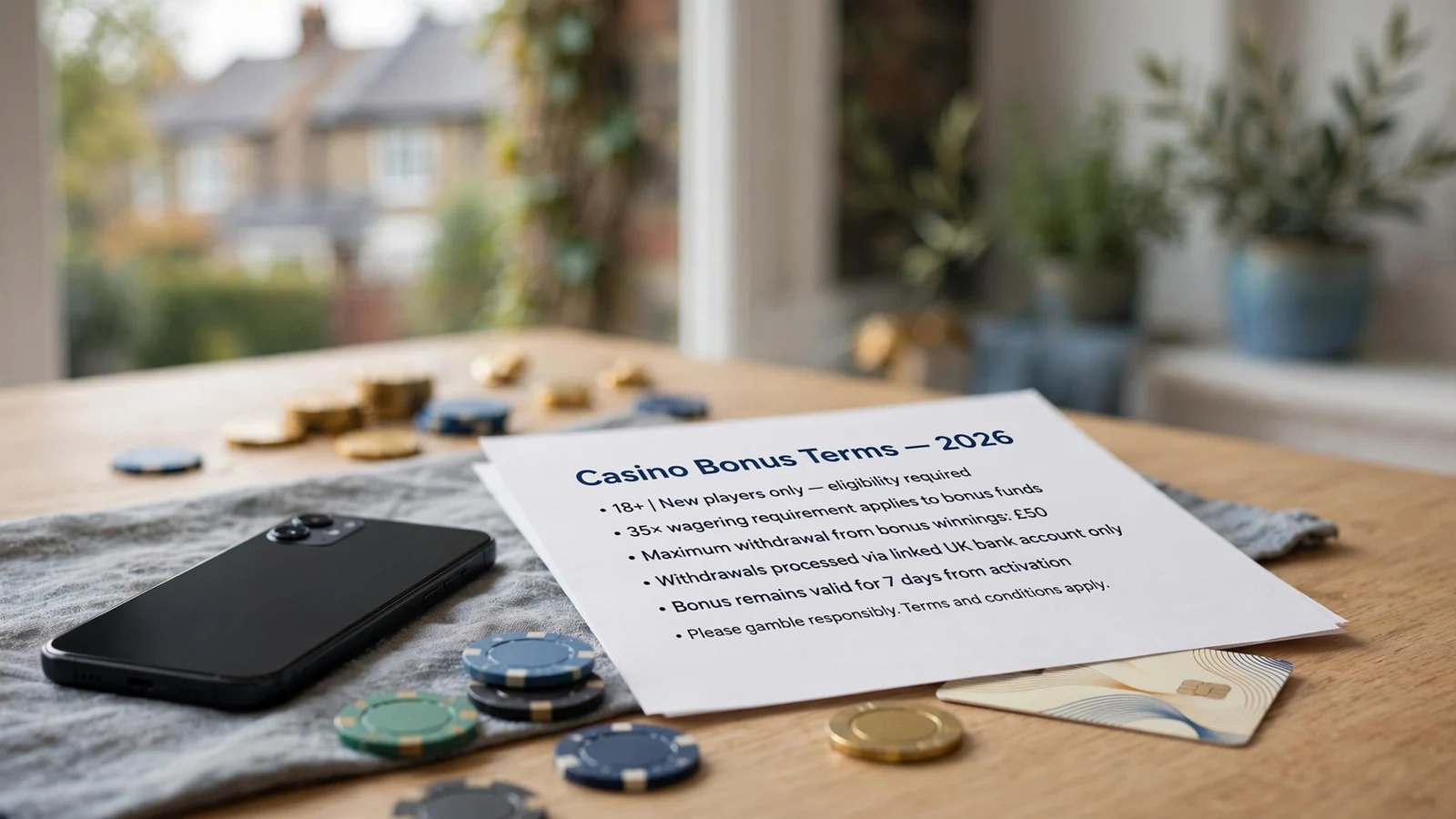
A casino showing Google Pay as a deposit option does not mean a Google Pay deposit will qualify for its welcome offer. Those are separate questions. I used to treat a payment button as a green light for the whole deal; it only tells you something about paying in. The promotion has its own terms, and those decide whether the deposit counts.
Before opting in, look for wording about eligible payment methods and qualifying deposits. If Google Pay is not named, or the terms are unclear, do not assume that it is included because the cashier accepts it. The same goes for a bonus advertised broadly across the site: a headline may not spell out every payment restriction. Read the promotion’s conditions before you deposit, not after you have made a payment and started wondering why the offer did not attach.
That distinction matters with casino accounts that let you choose among payment routes. A promotion may apply only to particular methods, or its terms may treat deposits differently depending on how they were made. I cannot infer bonus eligibility from the presence of Google Pay, and neither should you. Look for an explicit statement in the offer terms or ask the operator to confirm it before taking part. Keep the answer in writing if you contact support. Less guesswork.
If you’re looking for a UK casino that accepts Google Pay, check the available payment methods before depositing, as they can vary. The payout details below provide one practical point to consider when reviewing your options.
Payout speed: 1-3 business days You can expect payouts in 1–3 business days. Google Pay availability is not specified here, so check the cashier before depositing.
Payout speed: 1-3 business days Payouts are listed as taking 1–3 business days. You’ll need to check directly whether Google Pay is available.
Payout speed: 1-3 business days The stated payout speed is 1–3 business days. Google Pay acceptance isn’t confirmed by the information available here.
Payout speed: 1-3 business days You can expect payouts in 1–3 business days. Check the payment methods directly to confirm whether Google Pay is supported.
Payout speed: 1-3 business days Payouts are listed at 1–3 business days. The available details don’t confirm Google Pay acceptance, so check before depositing.
Payout speed: 1-3 business days The stated payout speed is 1–3 business days. You’ll need to verify Google Pay availability with the operator.
Payout speed: 1-3 business days You can expect payouts in 1–3 business days. Google Pay availability isn’t specified, so confirm it before making a deposit.
Payout speed: 1-3 business days Payouts are listed as taking 1–3 business days. Check the cashier to see whether Google Pay is supported.
Payout speed: 1-3 business days The stated payout speed is 1–3 business days. The information available here doesn’t confirm whether you can deposit with Google Pay.
Payout speed: 1-3 business days You can expect payouts in 1–3 business days. Check directly with the operator to confirm Google Pay acceptance.
The same caution applies to other payment methods. A specialist review has reported that PayPal can be excluded from bonus eligibility, despite being popular for its speed and convenience. That is a reported condition, not a rule you can safely apply to every casino or promotion. It is a useful reminder to check the specific offer rather than assume that a familiar payment brand either qualifies or does not.
When people look for a Google Pay casino bonus, they are often trying to solve two things at once: how to fund an account and whether a promotion is worth claiming. Keep them separate. First establish what the offer actually requires. Then decide whether the payment method you intend to use meets those requirements. If you cannot find a clear answer, pausing is better than making a deposit on the strength of a banner.
Read the terms for the conditions that affect your own decision: whether you need to opt in, which deposits count, and what restrictions apply to any bonus funds. Those details belong to the promotion, not to Google Pay itself. Do not treat a bonus as cash in your balance before you understand its conditions. “Free” can mean conditional; the small print is where the conditions live.
There is also a slot question tucked into searches for casinos where you can deposit with Google Pay. A payment method does not tell you what games are available. It does not identify a casino’s slot catalogue, tell you which titles are included in a promotion, or establish that a particular game will be available when you sign in. I would not choose a casino on the assumption that Google Pay points to a particular set of slots. It doesn’t.
If an offer mentions slots, read the offer terms for any game restrictions rather than assuming every slot contributes in the same way. A general casino bonus and a slot-specific promotion are not interchangeable. The payment route still does not answer that question. You need the conditions attached to the particular promotion, and the games shown in the account are a separate matter.
Nor does a request for the “best” slots with Google Pay have a clean answer based on the payment method. Google Pay is a way to pay; it is not a rating of games. Without checking a casino’s own current game information, naming favourites or promising a particular title would be guesswork. I would rather be blunt about that than dress an assumption up as a recommendation.
So, when weighing a Google Pay deposit against a casino bonus, start with the terms, not the promotional headline. Confirm that the offer is available to you and that your intended deposit route is eligible. Treat the slot catalogue as a separate question. A payment option, a bonus and a list of games may sit on the same page, but one does not prove the other.
- Read promotion conditions before depositing
- Check for explicit statements on eligible payment methods
- Ask operators for written confirmation of bonus eligibility
- Assume Google Pay qualifies for a welcome offer
- Infer bonus eligibility from a payment button
- Treat a bonus as cash before understanding its conditions
Check the cashier before you count on Google Pay
A payment-method logo on a review page is a lead, not a promise that Google Pay will work for your account. I’d make the cashier the final check, with the deposit screen open before deciding whether a casino suits the way you want to pay. What matters is what the operator offers there, for your location and the payment details you intend to use.
Start by signing in and opening the deposit cashier. Look for Google Pay as a named option, rather than assuming that a Visa or Mastercard logo means the wallet is accepted. A specialist review may list Visa and Mastercard, but that does not confirm current availability in the UK or whether your particular card product is eligible. Those details need checking in the cashier.
If Google Pay appears, read the instructions attached to it before going further. Check whether the screen asks you to choose a card or confirm a payment through your device, and whether the card you mean to use is available. If you cannot select it, or the cashier presents a message that does not fit your setup, pause and check with the operator rather than trying to work around it.
A payment option appearing on screen is useful evidence, but it is not proof that every card, account or device will be accepted. The final confirmation happens when the cashier allows you to review the transaction details. If anything is unclear, ask support whether Google Pay is available for your account and whether your card product is supported. I’d rather spend a minute getting a clear answer than guess and then have to untangle a failed payment.
Check the account currency at the same time. A specialist review may state that GBP is supported, but the currency shown in your own account is what matters before you transact. If it is not pounds sterling, ask what conversion will apply before continuing. This is an easy detail to overlook when you are focused on the payment button.
Keep the payment details consistent with your casino account. Using account information and a payment route belonging to the same customer can reduce avoidable friction over basic ownership details. If the card or wallet is not yours, or the names do not match, do not assume the deposit will go through; ask the operator what it accepts.
The check is much the same whether you are using a casino website or an app: open the actual deposit area and inspect the options presented there. A general claim that a casino accepts a payment method cannot confirm what appears in your own cashier. Nor does a method shown in one place establish that it will be shown in every version of the service. Take the screen in front of you as the relevant check.
I’d also keep a simple distinction in mind: a card logo, a wallet logo and a working payment choice are three different things. A casino may list a card brand in its payment information, while the cashier does not offer that product to you. Or Google Pay may be visible, while the card you planned to use is not available at the confirmation stage. Don’t treat one as proof of the other.
Checking the Cashier
Sign in to your account and access the cashier to see available options.
Look for Google Pay as a named option rather than assuming a card logo implies wallet acceptance.
Check if the screen asks to choose a card or confirm via device, and ensure your specific card product is eligible.
Ensure the account currency is shown as pounds sterling (GBP) before transacting.
If the option is missing, do not keep pressing through unrelated payment routes hoping to reach it. Ask support directly whether the cashier currently accepts Google Pay for your account and what information they need to confirm compatibility. Keep their response and the cashier details handy if you need to follow up. If the operator cannot give you a clear answer, take that as a reason to wait, not as a cue to deposit another way.
This is a practical check, not a guarantee that a payment will be approved. The cashier can show what the operator makes available; the details you enter and the payment provider’s response still matter. My rule is boring, but it saves hassle: confirm the method, confirm the card, confirm GBP. Then decide.
Google Pay slots: what the payment method does—and doesn’t—tell you
Seeing Google Pay in a casino’s payment options tells you something about a way to fund an account. It doesn’t tell you which slots are in the games lobby. I used to treat a payment badge as a clue that the whole site had been checked out for me. It isn’t. The cashier and the game catalogue answer different questions.
A casino might have a broad slot selection, a narrower one, or games that change over time. The payment method does not identify providers, titles, features or availability. So a page that says you can deposit with Google Pay should not be read as a promise that it offers a particular slot. Check the games area itself, and confirm that the games you want are available to your account before you deposit.

Then keep the deposit conditions separate from the games. Before playing, read the cashier’s instructions and the terms attached to the chosen payment route. Look for the minimum deposit, any payment-specific restrictions and whether the amount you intend to add is accepted. A specialist review reports minimum deposits in the £10–£20 range depending on the payment method, but that is not a figure to assume for every casino or every transaction. The cashier is where the actual requirement should be clear.
That distinction matters if you have a particular amount in mind. A deposit route can have conditions that differ from another route at the same casino. If the cashier shows a minimum above what you planned to spend, stop there rather than switching into a larger deposit just to get through. I’ve made the mistake of treating a small prompt as a nudge to spend more. It’s still your money.
The same caution applies on a phone. A mobile-friendly cashier or a Google Pay button does not establish that every game works on your device, or that every game shown on the site is available in the mobile version. Open the games lobby on the device you intend to use and check the relevant title there. Don’t infer a games list from the payment logo.
UKGC-licensed remote gambling operators must prompt new customers to set a financial limit before their first deposit and provide account-level controls to manage these limits.
I’d also avoid treating labels such as “best” as a shortcut. The useful comparison is practical: is the game you want actually listed, can you access it on your device, and do the deposit conditions fit the amount you have decided to spend? A payment route cannot answer those questions for you.
Before you start, make your own limit rather than letting a minimum deposit set the pace. UKGC-licensed remote gambling operators must prompt new customers to set a financial limit before their first deposit and provide account-level controls to manage limits. Use those controls if they help you keep to your plan.
Separate the steps: check the game, check the deposit terms, then decide whether to proceed. Google Pay is a payment route, not a catalogue or a recommendation. No magic shortcut.
Do online casinos actually take Google Pay?
It is reasonable to ask whether any UK online casinos accept Google Pay, but a payment method being familiar on your phone is not proof that a particular casino will take it. I would not treat a general claim about Google Pay as confirmation that you can use it at every site, or even that it will appear for every customer.
The useful answer is narrower: availability has to be confirmed with the casino you intend to use. A payment logo on a promotional page or an old review can be a starting point, not a promise. Payment options can change, and a method may not be offered to every account or for every transaction. The cashier is the place to establish what is available to you.
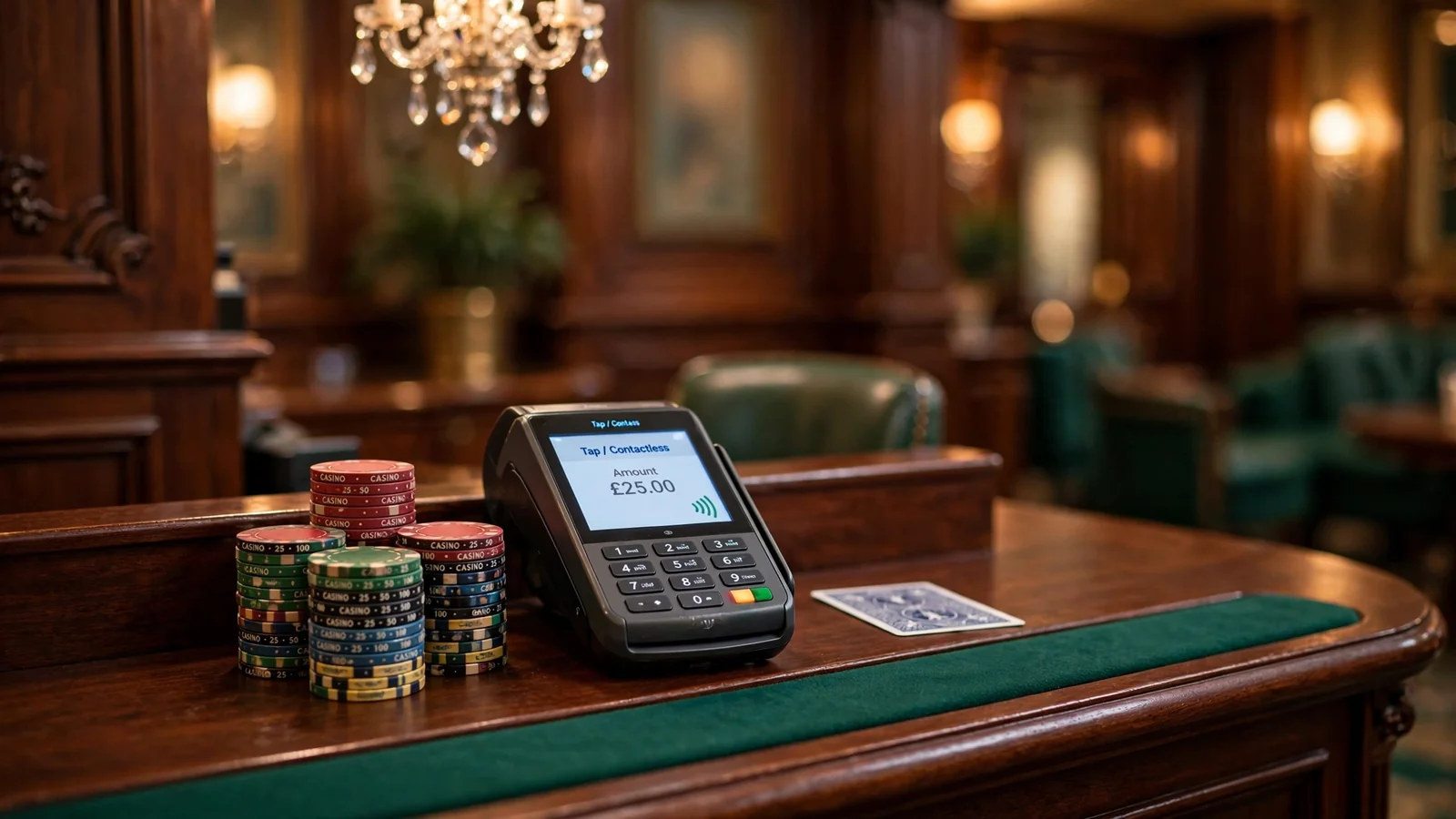
That matters if you are comparing sites described as “Google Pay casinos”. The phrase sounds definitive; in practice, it can blur together a site that has mentioned the service, a site that supports it under certain conditions, and one where it is actually available to you when you try to deposit. Those are not the same thing.
I would also keep the deposit question separate from the withdrawal question. Seeing Google Pay listed for deposits would not, by itself, show that withdrawals can be paid back through Google Pay. The route used to put money in and the route used to receive funds are separate details to confirm. Don’t infer one from the other.
Before relying on a payment option, make sure the casino account and the payment route are yours and use matching personal details. When the basic ownership information lines up, there is less room for a straightforward transaction to be held up over questions about whose account or funds are involved. It is a small check, but an avoidable mismatch is a needless headache.
There is another distinction worth keeping clear: a payment service’s availability does not establish that a casino is suitable or lawful for a UK player. For real-money gambling in Great Britain, remote gambling licensees serving customers must hold the relevant UK Gambling Commission licence. Google Pay does not tell you whether that requirement is met; the payment button is not a regulatory check.
Attention: A payment logo is not a regulatory check; you must verify that the operator holds a relevant UK Gambling Commission licence for real-money gambling in Great Britain.
So, can you use Google Pay at an online casino in the UK? Possibly, but don’t assume it from the name of a page, a general list, or another player’s experience. Confirm that the casino offers it to you before you plan around it, and make sure you understand whether the option applies to the transaction you intend to make. If it is not shown or the payment does not go through, that is not evidence that every other casino will behave the same way.
No blanket promise. Just check the actual option available to your account, rather than trusting the label.
Google Pay, cards and the UK gambling payment rules
When you pay through Google Pay, the important card question is what sits behind the payment: a debit card or a credit card. A digital wallet does not change the underlying source of funds, and it does not create an exception to UK gambling rules.
UK casinos commonly accept debit cards, including Visa and Mastercard. That makes a debit card a familiar route for gambling payments, but it doesn’t mean every card product or every wallet setup will be eligible. The payment must still be handled in a way the operator can accept.
Credit-card payments for gambling are banned in the UK. The regulator introduced the ban on 14 April 2020, and it has not been relaxed. Remote gambling licensees must not accept credit-card payments for gambling, including when credit-card funds are routed through a money service business. So adding a credit card to a wallet does not make it a permissible way to fund casino play.
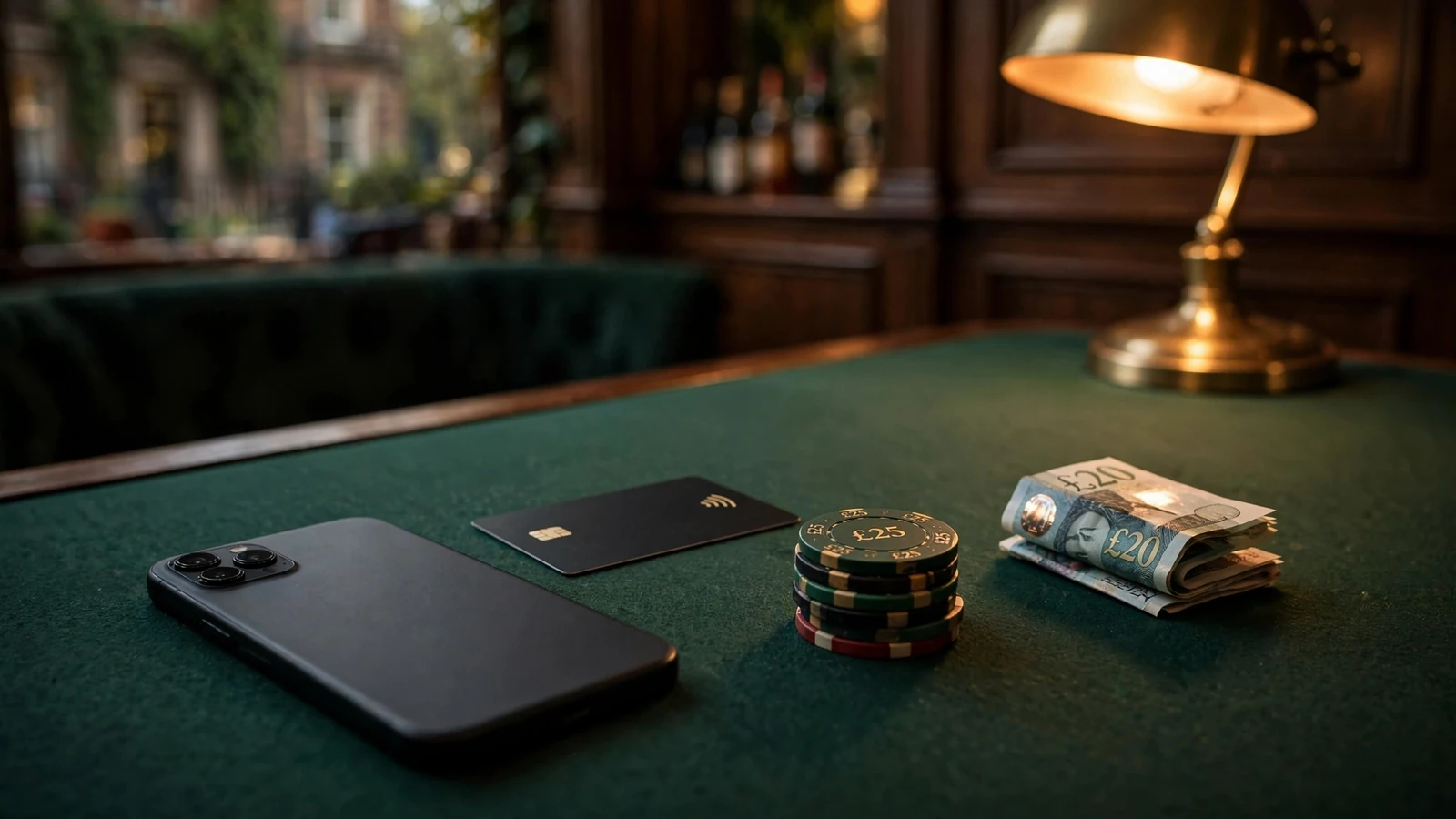
There’s a related restriction on wallet payments: an operator cannot accept a wallet payment where that wallet allows credit-card funds to be used for gambling. The point is not just the button or brand shown at checkout. The route and funding source matter. If you are choosing Google Pay at a casino, don’t assume that any card stored in your phone will work simply because the wallet itself appears as a payment option.
I used to treat “card accepted” as a simple yes-or-no label. It isn’t. Debit and credit are different products, even when they carry the same card-network name or sit in the same wallet. A Visa debit card and a Visa credit card are not interchangeable for gambling payments.
Same logo, different rules.
For a practical decision, identify the card as debit or credit before you try to use it. If it is a credit card, don’t use it for casino gambling through Google Pay or another route. If it is a debit card, its presence in a wallet still does not prove that the casino will accept that particular payment setup. The relevant distinction here is eligibility, not the convenience of tapping a phone.
This is also why wording such as “Google Pay accepted” can leave out something that matters to you. A wallet label alone does not tell you whether your chosen funding source is permitted. Keep the card type in view, and don’t try to get around the credit-card ban by moving the payment through a wallet or intermediary.
The rule is straightforward, even if payment screens make it look less so: debit-card gambling payments may be accepted; credit-card gambling payments are prohibited. Google Pay does not alter that line.
Credit Card Ban
Credit-card payments for gambling are banned in the UK; adding a credit card to a digital wallet does not make it a permissible funding source.
If Google Pay isn’t available, compare the actual alternatives
When a cashier doesn’t offer Google Pay, I don’t assume the next option will behave the same way. Payment methods differ in whether they support deposits, withdrawals or both, and in how their terms treat promotions. The useful comparison is about what you need from the route, not a blanket “best” label.
PayPal is one alternative to consider. A specialist review describes it as popular for speed and convenience, but also notes that a deposit made with it may not qualify for a bonus. That is a reason to read the promotion’s payment terms before you pay, not a reason to assume every casino applies the same rule. I once treated the payment logo as the whole story. It wasn’t.
Open banking and bank transfers are another route. A specialist review says these can allow instant deposits and fast withdrawals at many sites; that doesn’t establish that every casino supports both functions, or that the timing will be identical everywhere. Check the cashier and the withdrawal terms for the specific account.
Skrill and Neteller may also appear, but availability is site-specific. A specialist review reports that some casinos offer them and that they are often excluded from promotions. If a bonus matters to you, confirm the eligible payment methods in the offer’s terms before depositing. The cashier’s list alone may not answer that.
Paysafecard is different: it is a prepaid voucher for deposits only. Don’t pick it expecting to use the same route for a withdrawal. Before choosing it, consider how you would receive any payout and whether the casino’s stated process works for you.

A practical comparison is simple: first, check that the method is offered to you; then establish whether it covers the transaction you intend to make; finally, check any promotion conditions attached to it. “More choice” is not automatically more useful. A method that fits your deposit but conflicts with a bonus, or doesn’t cover the cash-out route you want, may be the wrong alternative for your situation. Verify the details before sending money.
Deposits may be quick; payouts are a separate step
A deposit and a withdrawal are not the same transaction running in opposite directions. A card payment can show up straight away, while a payout may take several business days, according to a specialist review. That is a reported possibility, not a timetable to bank on for every casino or payment route.
I used to read “instant deposits” as if it meant the money would move just as quickly when I cashed out. It doesn’t. A deposit confirms funds going in; a withdrawal can involve the casino checking the request before it is sent, then the receiving payment service or bank handling it. Different stages, different clocks.
KYC can add time too. If the casino still needs to verify your account, its internal approval may take longer, particularly on an early withdrawal. So a quick deposit does not tell you whether your account is ready for a payout, or when the money will arrive. Annoying, but worth knowing before you plan around it.
Factors affecting payout timing
Withdrawal speed can be influenced by the casino’s internal approval process, KYC verification requirements, bank cut-off times, weekends, and potential currency conversions.
Bank transfers have their own timing wrinkles. A specialist review identifies the bank’s cut-off time, weekends and currency conversion as factors that can affect delivery. A request made after a processing cut-off may not move on the same schedule as one made earlier; weekends can also interrupt the working-day flow. If a conversion is involved, that is another step to account for. The exact effect depends on the route and the parties processing the payment.
When I’m checking a casino’s payment information, I look for separate wording for deposit speed and withdrawal timing. “Fast” on a deposit description is not a promise about cashing out. If the withdrawal information is vague, I treat the arrival time as uncertain rather than filling in the gap with the best-case scenario.
It also helps to keep the stages distinct in your head: the casino may need to approve a request, and then the payment has to reach your bank or account. A status such as “processed” may describe the casino’s part, not the moment the funds appear at the other end. Check what the operator means by its timing language and whether it describes approval or delivery.
No magic mirror. Deposit speed is only one part of the journey; payout timing depends on what happens after you request the money.
Can a casino send withdrawals back to Google Pay?
A deposit made through Google Pay does not, by itself, prove that a casino can pay winnings back through the same route. I used to treat “deposit and withdrawal” as one neat loop. It isn’t always that simple: the casino’s cashier and its withdrawal rules decide which destination is available.

UK anti-money laundering rules generally expect a payout to go back to the original payment source. That’s part of the closed-loop approach: returning funds to where they came from helps with anti-fraud checks. But Google Pay can sit between the casino and a card or account, so don’t assume that a withdrawal will appear as a direct payment to Google Pay just because that was how you deposited.
Before relying on that route, check the casino’s withdrawal page or ask support how a Google Pay-funded deposit is handled. Look for the named destination shown during withdrawal, and whether the casino needs you to select or verify an underlying card or account. If the casino offers another route, that does not automatically mean you can choose it: returning funds to the original source may take priority, and an alternative can involve extra checks.
The payout clock is separate, too. A specialist review notes that a casino’s internal approval can affect withdrawal timing, and that first withdrawals may take longer while verification is completed. The same review points to account verification as a factor in how quickly a withdrawal is processed. So even if the cashier accepts the payment route for a deposit, that tells you nothing firm about when a payout will arrive.
Have your account details ready and make sure the payment source belongs to you. Keeping the customer and payment details consistent can reduce avoidable ownership questions, though it cannot guarantee approval or a particular arrival time.
If support cannot explain where a Google Pay-funded withdrawal would go, don’t guess from the deposit screen. Get the destination clarified before you play. Small check, less hassle.
Can winnings be sent back to Google Pay?
This depends on the casino’s withdrawal rules; while anti-money laundering rules generally require returning funds to the original source, you should clarify the specific destination with support.
Does a quick deposit mean a quick withdrawal?
No, deposits are typically instant, but withdrawals involve separate stages, including casino approval and bank processing times.
Is account verification necessary for payouts?
Yes, KYC verification is a factor in how quickly a withdrawal is processed, and first withdrawals may take longer while this is completed.
Before depositing: limits, fees and the amount you’ll receive
A Google Pay deposit can look straightforward until the amount leaving your account differs from what you expected to reach the casino balance. Before confirming, check the minimum and maximum shown for that payment, the currency of your account and any charges attached to the transaction.
A specialist review puts some casino minimum deposits in the £10–£20 range, but that is not a fixed Google Pay threshold. The amount can depend on the payment method and the casino. If you are looking for a £5 deposit, don’t assume Google Pay will allow it: the cashier’s displayed minimum is the useful figure for that particular transaction.
The maximum is just as variable. A specialist review notes that limits may apply per transaction, per day or per month, and can depend on both the selected method and your account status. If you’re planning a larger deposit, check the relevant limit before you submit it rather than discovering it at the payment screen.

Then look beyond the casino’s own fee line. A specialist review identifies possible costs from the casino, payment provider, card issuer or bank, currency conversion, and payment network. Not every charge will apply to every deposit, so check the terms for the route you are using. If your account balance or payment is not in pounds, compare the exchange rate as well as any stated fee. A specialist review warns that the conversion spread can cost more than a visible flat charge.
The number on the deposit screen is not always the whole cost. I’ve learned to pause at the final confirmation, where the amount and currency should be clear, and compare that with the amount my bank or wallet will actually debit. Small print matters.
Before making a first deposit, also check the casino account currency; a mismatch can trigger conversion costs. The aim isn’t to find a universal cheapest method—there isn’t one. Compare the charges for the amount you intend to pay, then decide whether the deposit still makes sense.

Google Pay does not make a casino ‘not on Gamstop’
Google Pay is a way to pay; it does not tell you whether a casino is connected to Gamstop, covered by a self-exclusion arrangement or outside one. Seeing the payment logo in a cashier cannot answer that separate question. I would not use it as a shortcut for judging a site’s status.
The same goes for searches for Google Pay casinos “without Gamstop”. That wording joins two things that need checking independently: whether a payment route is offered, and what self-exclusion protections apply to the operator. A casino accepting Google Pay is not, on that basis, “not on Gamstop”. Nor does using Google Pay bypass a self-exclusion.
In Great Britain, remote gambling licensees serving customers must hold the relevant UK Gambling Commission licence. Licensed casinos must also provide responsible-gambling tools, including self-exclusion. Those requirements are about the operator and its obligations, not the payment method you choose. The Gambling Act 2005 applies in England, Wales and Scotland; Northern Ireland has a different legal framework.

If you are checking a particular casino, look at its licensing information and the terms describing its self-exclusion arrangements. You can verify a claimed UKGC licence on the Commission’s public register. Don’t infer anything from a Google Pay badge, a payment page or a claim about “no Gamstop” alone. Marketing labels can blur distinctions that matter.
I have learned not to treat a familiar checkout button as proof of anything beyond a possible payment route. If you have self-excluded or are trying to avoid gambling, do not test whether a payment method will get around that decision. Use the support and blocking tools available to you instead.
Keep the two questions separate: can you pay this way, and what protections govern the casino? One answer does not settle the other.
What is the fastest withdrawal method for UK casinos?
PayPal, open banking and debit cards linked to fast payout systems are generally among the quickest options. The time also depends on the casino’s approval process and whether your account is fully verified.
Why must withdrawals return to the deposit method?
Returning funds to the original payment source is a common anti-fraud and anti-money-laundering control. Using the same account for deposits and withdrawals can also reduce avoidable transaction checks.
Which payment methods are accepted in Great Britain?
UK casinos commonly accept debit cards such as Visa and Mastercard; many sites also offer bank transfers or open banking, and some accept e-wallets such as Skrill or Neteller. Check the cashier for the methods available to your account.
Are Visa and Mastercard deposits definitely debit cards?
No. A Visa or Mastercard logo does not confirm which card products are accepted, so check the cashier for your card’s eligibility. Credit-card gambling has been banned in the UK since 14 April 2020.
Is Skrill available?
Yes, Skrill is available at some UK-friendly casino sites, though it may be excluded from promotions. Check the cashier and the specific bonus terms.
Can I deposit in GBP?
Yes, GBP is supported at the supplied sites. Check your account currency before depositing to avoid conversion.
What is the current minimum deposit?
The minimum deposit usually starts at £10–£20, depending on the payment method.
Created by the ”Reclamationstudios.org” editorial team.