Casinos That Accept eChecks in the UK: What to Check
 Available in GB
Payment labels, account availability, deposit timing and withdrawal delays can differ from what casino pages or older guides suggest.
Table of Contents
- What UK casino cashiers actually show
- How to verify an echeck claim before you sign up
- Echeck deposits: limits and payment fit
- Instant deposits don’t mean instant withdrawals
- What an echeck payment can cost you
- Choosing a payment route without chasing ‘best’
- Using a casino app: check the cashier, not the icon
- Payment names can change; check what’s currently offered
- Keeping payment details consistent helps avoid friction
- Why an echeck withdrawal may take longer
What UK casino cashiers actually show
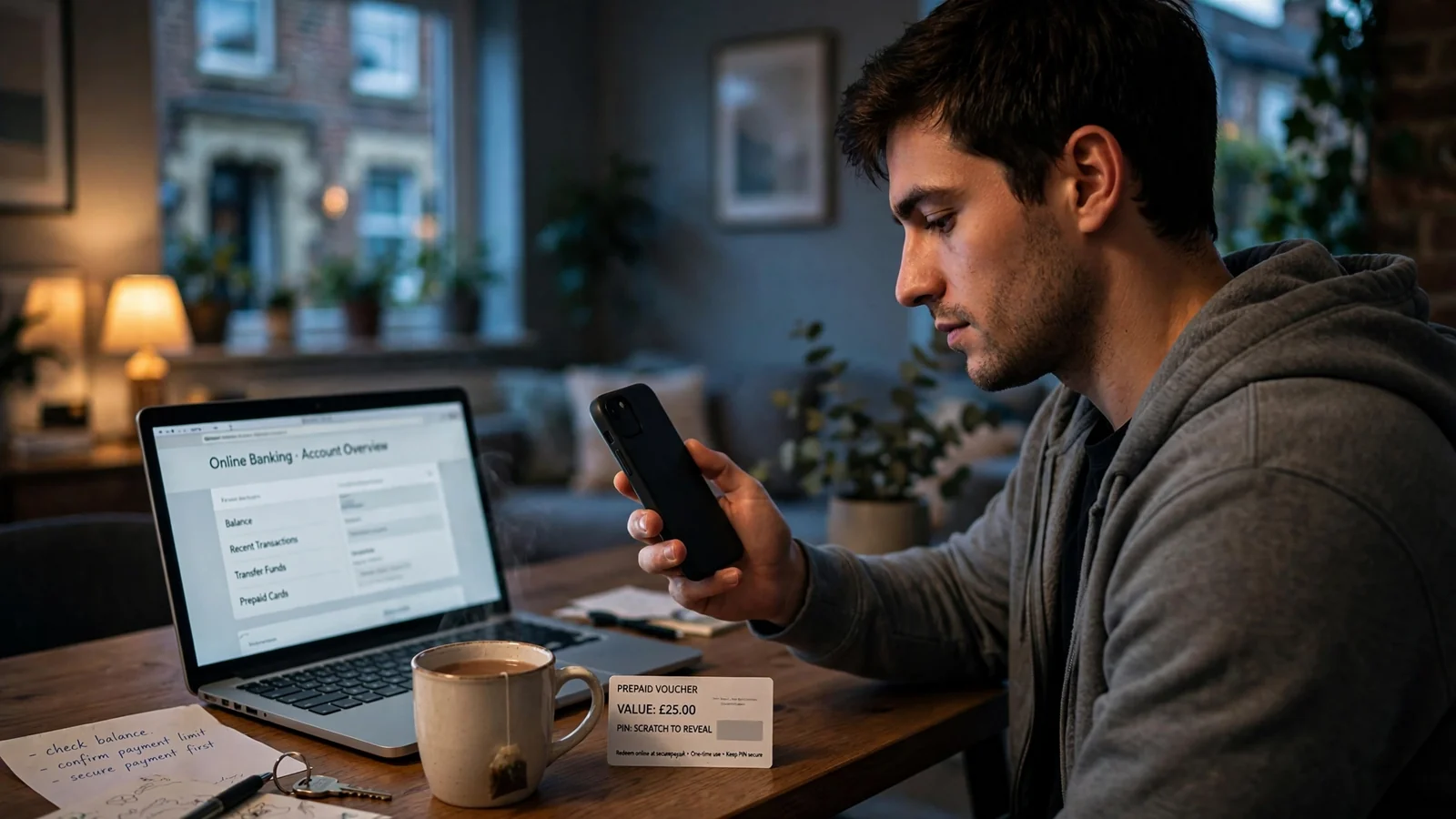
A payment badge on a casino page is a starting point, not proof that you can use that method. I have learned to treat a cashier as the more useful snapshot: it shows the options presented to you when you are logged in, rather than what an old guide, a promotional banner or a search result says might be available.
That matters when you are looking for an echeck online casino in the UK. The label can appear in a page title or a list of payment methods without telling you whether the route is available to a UK customer, whether it is offered for your account, or whether the cashier uses that name at all. I would not treat a general claim about echeck deposits as confirmation that you can pay by echeck at a particular site.
The cashier is also where you can see the method names the operator currently uses. A payment page might group options under cards, bank payments or e-wallets, while a review uses a broader label. Those descriptions do not always match neatly. If you are trying to pay with an echeck at an online casino, the useful question is not whether the phrase appears somewhere on the site; it is whether a relevant option is actually presented in the cashier for your account.
If you’re looking for UK casinos that accept echecks in 2026, use this list as a starting point and check each operator’s current payment options before signing up. The available details here cover payout speed, not echeck availability.
Payout speed: 1-3 business days Zombillion lists a payout speed of 1–3 business days. Check directly whether echecks are currently available to you.
Payout speed: 1-3 business days Chanze lists a payout speed of 1–3 business days. You’ll need to confirm its current echeck options with the operator.
Payout speed: 1-3 business days BeOnBet lists a payout speed of 1–3 business days. Verify directly whether it supports echecks for UK players.
Payout speed: 1-3 business days EvoSpin lists a payout speed of 1–3 business days. Check its current payment methods to see whether echecks are offered.
Payout speed: 1-3 business days Amunbet lists a payout speed of 1–3 business days. Confirm echeck availability with the operator before relying on it.
Payout speed: 1-3 business days x3bet lists a payout speed of 1–3 business days. You should check directly whether echecks are among its available payment methods.
Payout speed: 1-3 business days SpinFormula lists a payout speed of 1–3 business days. Contact the operator or check its payment page to confirm echeck support.
Payout speed: 1-3 business days NightLuck lists a payout speed of 1–3 business days. Check whether echecks are currently available in your region.
Payout speed: 1-3 business days Britsino lists a payout speed of 1–3 business days. Verify its current echeck options directly before you sign up.
Payout speed: 1-3 business days Dieselwin lists a payout speed of 1–3 business days. Check with the operator to confirm whether it accepts echecks.
There is a small but important difference between a site saying it accepts a payment brand and that brand being available to you. A specialist casino review may list Visa and Mastercard, for instance, but the current cashier is where I would check whether a card option is available to UK customers and whether your particular card product is eligible. For gambling in the UK, that means looking at debit-card payments, not assuming a credit card can be used. The UK ban on credit-card payments for gambling remains in force.
I used to skim payment logos and move on. It felt like enough. It wasn’t. A logo can tell you what a page has chosen to mention; it does not show the options currently displayed when you try to make a transaction. An old page may still be live, and a general list may not explain which options apply to a UK account. The cashier is less glamorous, but it is closer to the decision you actually need to make.
Currency deserves a glance at the same point. A specialist review may say that a site supports GBP, but I would confirm the account currency before making a transaction. If the account is set to another currency, the amount shown to you may be converted. That is easy to overlook when the payment method itself looks familiar. The currency displayed in the account and cashier is more useful than an assumption based on the country the site serves.
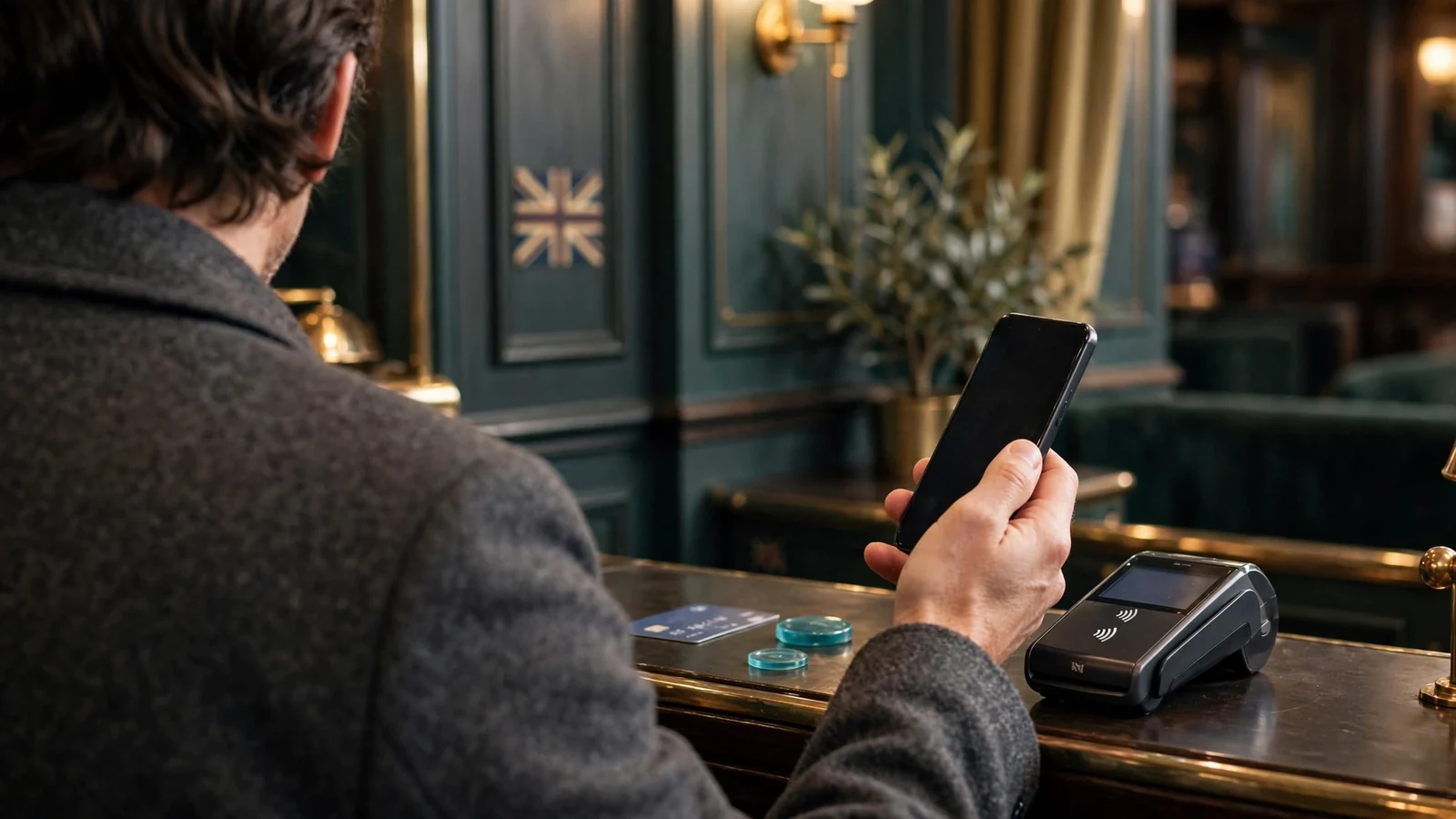
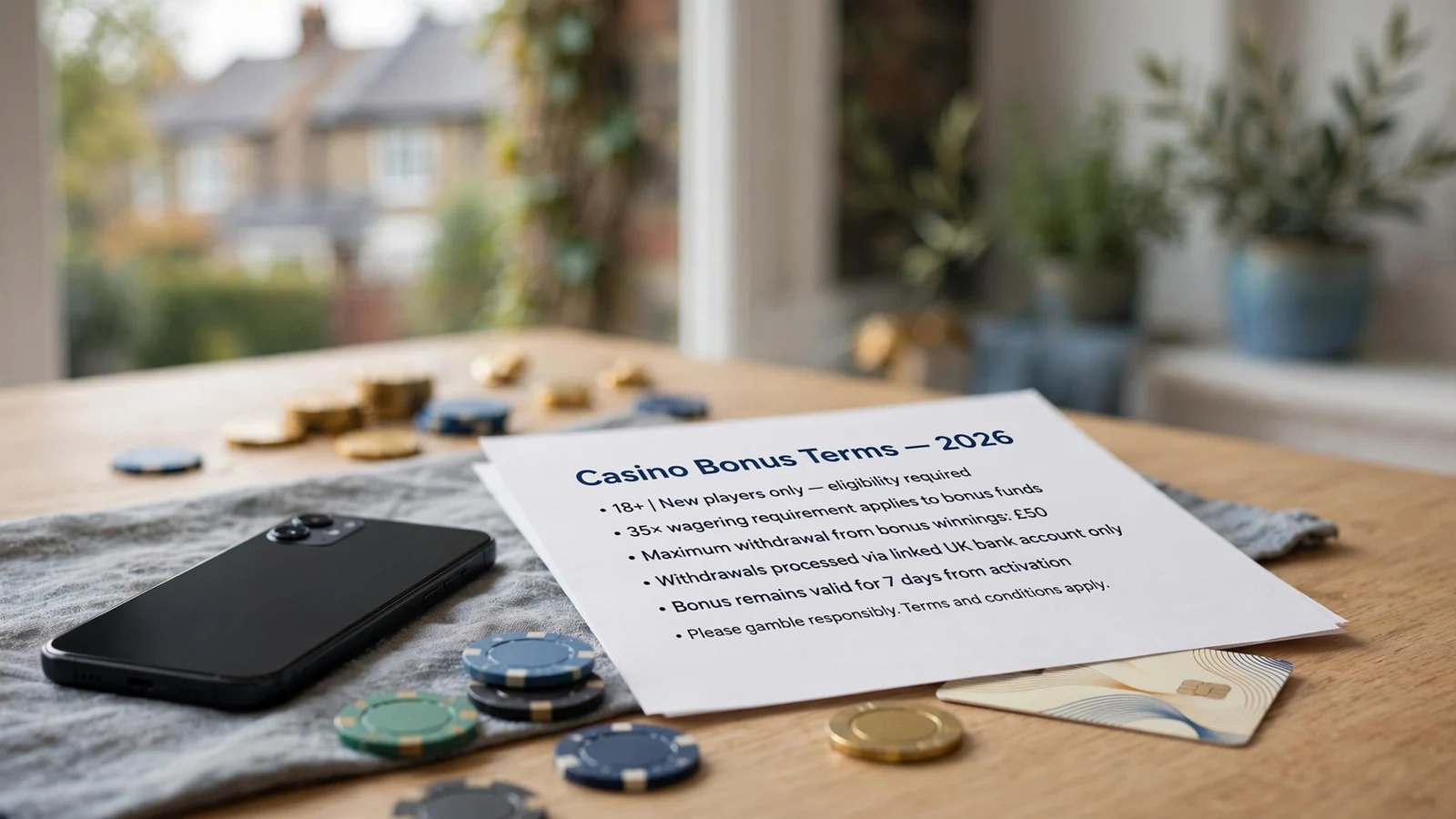
I also separate seeing a payment method from deciding whether it suits me. The first check is simply what the cashier offers and how the option is named. Whether it works for deposits and withdrawals, what limits apply, how long a payout takes and what a transaction costs are separate questions. I have mixed those together before and ended up with a confident impression built from details that did not answer the same thing. Better to take the cashier one step at a time.
For a UK player, the broad check is straightforward: open the account cashier, look at the payment methods presented there, and read the accompanying labels rather than relying on an icon elsewhere. If the method you expected is absent, do not substitute a vaguely similar label in your head. If it is present, that still does not settle every practical detail; it only tells you what the cashier is showing at that point.
That is the difference between a page that mentions echecks and an online casino that actually presents an echeck route to you. I would not call a site one of the best echeck casinos on the strength of a headline or a dated payment list. First I want to see what is available in the cashier for a UK account. Then I can assess the rest. No guesswork.
- Open the account cashier to check available methods
- Read the accompanying labels in the cashier
- Verify that the method is presented for your specific account
- Rely on a payment badge on a casino page
- Assume a general claim about echecks is confirmation
- Substitute a vaguely similar label for a missing method
How to verify an echeck claim before you sign up
I treat “echeck accepted” as a claim to confirm, not a reason to register. A payment label on a comparison page or an old review does not prove that the route is available to a UK customer today. The useful question is narrower: can you see and select that payment method in the actual cashier for the account you would use?
That distinction matters because payment information can be broad, dated or written for a different country. A site may serve customers in several places, while its available methods depend on where the customer is based. An echeck mention on a general payments page is not enough to establish that the option will appear for a UK account. Nor does the word alone tell you precisely how the transaction is handled.
I used to take a neat list of logos as confirmation. It felt like checking the job was done. It wasn’t. A logo might be there for a different payment route, or the method might not be offered to every customer. The cashier is the practical test: look for the named option while signed into the account with your UK details, and read the operator’s description of what that option does.
If you are not ready to create an account, look for wording that expressly applies to UK customers and distinguishes echeck from other bank or electronic payment methods. If the wording is vague, ask the operator before signing up. A direct answer should identify whether the cashier supports echeck for a UK customer, rather than simply repeating that the casino accepts “bank payments” or “online payments.” Those phrases are too broad to settle the point.

There is no need to turn this into a hunt for a “best” or “top” echeck casino. A ranking cannot make an unverified payment claim true. I would first establish that the particular site is authorised to serve customers in Great Britain, then check the claimed method against the site’s own current information. Remote gambling licensees serving the British market need the relevant Gambling Commission licence. The public register lets you check the operator’s licence rather than relying on a badge or a confident line of copy.
Before registering, pay attention to whether the payment information refers to the same country and type of account you intend to use. An operator’s general terms may describe methods available somewhere in its wider service, not necessarily to every customer. If the site’s wording leaves that unclear, do not fill in the gaps yourself. Ask support in plain terms: “Is echeck available in the UK cashier for my account?” Keep the response, but still check the cashier once you have access to it.
When you reach the cashier, compare the exact method name there with the claim that brought you to the site. A similarly named bank transfer or wallet is not automatically an echeck. If the cashier offers a route under a different name, ask what it is before choosing it. I would not treat a generic “supported payments” page as proof that two differently labelled methods are interchangeable.
The details you use should also belong to you. Using account information and a payment route associated with the same customer reduces the chance that a basic ownership mismatch creates avoidable transaction friction. That is not a promise that every payment will go smoothly; it is simply a sensible consistency check. The cleanest route is often one named account used consistently for both deposit and withdrawal.
Verify Echeck Availability
- Check if the operator is licensed for the British market
- Confirm payment information specifically covers UK customers
- Identify the echeck option in the relevant cashier
- Ask support if the echeck option is not clearly visible
So, before you sign up, check three things: the operator is licensed for the British market, its payment information specifically covers UK customers, and the echeck option is actually identifiable in the relevant cashier or confirmed clearly by the operator. If one of those pieces is missing, the claim remains unconfirmed. Don’t guess.
Echeck deposits: limits and payment fit
A deposit limit is not just a number attached to a casino account. It can depend on the payment route you select and the status of your account, so an amount shown for a card or bank transfer should not be assumed to apply to an echeck. I’d check the terms for the specific method in the cashier before deciding how much to deposit.
That distinction matters when comparing echeck deposits with other routes. A site may display one general minimum in its promotional material, while the cashier sets a different threshold for the method you choose. A specialist review reports that minimum deposits can start within the £10–£20 range, depending on the payment method. Treat that as a guide to what one review describes, not a promise that an echeck deposit at a particular casino will meet either figure.
The cashier is where the method-specific condition matters. Check the minimum shown after selecting the payment route, and read any accompanying terms before confirming. If the amount you intend to deposit falls below that minimum, the transaction may not go through; if the method has a higher threshold than another option, that can change whether it suits your budget. Small detail. Real consequence.

Maximums need the same care. A casino may set a cap for a single transaction, and separate limits can apply across a day or a month. Those caps can vary by payment method and account status. So a limit you saw while logged out, or one attached to a different route, may not describe what your own cashier will permit.
I would look for the limit attached to the selected method and account, rather than rely on a general figure copied from an older page. If the cashier shows a transaction maximum, check whether it is clearly labelled as per transaction. If it presents a daily or monthly cap as well, keep those separate in your notes. One can affect a single deposit; another can restrict the total deposited over a period.
Account status is part of the picture, too. A limit available to one customer may not be available to another, and a displayed ceiling is not an invitation to deposit up to it. Your own financial limit matters more than the casino’s maximum. UKGC rules require remote gambling licensees to prompt new customers to set a financial limit before their first deposit and to provide accessible account-level controls. Set a limit that fits your circumstances, then treat it as a boundary rather than a target.
There is a practical difference between a deposit limit and your personal spending limit. The cashier’s figures tell you what the method and account may allow. Your account controls help you decide what you are prepared to spend. If the payment method’s minimum is higher than the amount you have set aside, do not stretch your budget just to make the transaction fit. Pick a different route only if it is genuinely suitable and available to you.
UKGC rules require remote gambling licensees to prompt new customers to set a financial limit before their first deposit and to provide accessible account-level controls.
Before confirming an echeck deposit, I’d make a short check of the payment conditions: the minimum, any per-transaction maximum, and any daily or monthly cap that applies to the account. Confirm the currency shown as well, so the amount you enter is the amount you mean to deposit. The point is not to hunt for the largest permitted transaction. It is to know what the cashier will accept and whether that fits your own limit.
If a limit is unclear, pause instead of guessing. A number shown on a general payments page may not answer what applies to the echeck option in your account. The useful comparison is between the route you have selected and the limits displayed for that route—not between an echeck figure and a headline figure for another method. I’ve found that assuming two payment methods share the same conditions is an easy way to get caught out.
A deposit that fits the cashier’s minimum can still be the wrong choice for you. Check the payment-specific terms, your account-level controls and the amount you actually intend to spend. Then make the decision before entering payment details, not while trying to complete a transaction. Small pause. Better control.
Instant deposits don’t mean instant withdrawals
The deposit button can make a payment feel finished before the money has even left your mind. You confirm it, the balance updates, and the casino is ready to play. A withdrawal is a different journey: the casino sends a payment out, and the route it uses to reach your bank can take longer. A quick deposit is not a promise of a quick payout.
That distinction matters if you are looking at echeck deposits. The word “instant” may describe how quickly a deposit appears in your casino balance, not how quickly you can get money back. I used to treat payment speed as one simple thing. It isn’t. Deposit time and payout delivery are separate parts of the same route.
A specialist review describes card deposits as potentially appearing straight away while a payout to a card can take several business days. That gap can catch you out if you judge a method only by what happens at the cashier when you add funds. The money arriving in your casino account tells you little about the time needed for a return payment.
Open banking and bank transfers can offer instant deposits and fast withdrawals at many sites, according to a specialist review. But “fast” does not mean every transfer moves at the same pace, or that the deposit and withdrawal are equally quick. The specific method, the casino’s stated processing window and the receiving bank’s handling all matter. Check the withdrawal information as well as the deposit screen; they answer different questions.
The clock may not start when you press withdraw
Bank transfers have a timing wrinkle that is easy to overlook: the time of day can matter. A request made before a bank’s cut-off may be handled differently from one made after it. If the transfer misses that cut-off, it may not move onwards until the next banking window. The exact schedule depends on the relevant service, so a cashier’s general speed label cannot tell you when your particular payment will arrive.
Attention: A transfer initiated late in the week or after a bank’s cut-off may not move until the next available processing window.
Weekends can add another pause. A transfer initiated late in the week may not travel through the banking system in the same way as one sent on a working day. That does not necessarily mean something has gone wrong. It can simply mean the payment is waiting for the next available processing window. A status that has not changed over a weekend is frustrating, but it is not by itself proof that the casino has lost the payment.
Currency conversion can affect delivery too. If the casino account and the receiving account do not use the same currency, conversion may be part of the transfer. That adds another moving piece, and the time displayed for the payment method may not explain every stage. Confirm the account currency before you make a deposit, then look at the withdrawal details for any note about the currency used to send funds.
Read speed claims as stage-specific
When a payment page says “instant”, look for what the word actually refers to. Does it mean the deposit is credited to the casino balance, the casino sends a withdrawal quickly, or the money reaches your bank? Those are not interchangeable milestones. If the page only describes deposits, don’t carry that promise over to withdrawals.
I now look for separate wording for deposit and payout timing, and I pay attention to whether the stated time refers to the casino sending the money or the bank receiving it. If those details are unclear, I treat the method’s speed as uncertain rather than filling in the blanks with the most optimistic interpretation. Less exciting. More useful.
This is especially worth doing with an echeck claim. A search result or an old payment description may call deposits instant, but that alone cannot establish how a current UK cashier handles the method or how quickly a payout travels. The cashier’s deposit information and withdrawal terms need to be read separately. A method’s name is not a timetable.

Before choosing a route, check the stated timing for both directions and note any wording about business days, cut-off times, weekends or currency conversion. Keep in mind that a fast deposit can coexist with a slower payout. That is not a contradiction; it is two different legs of the transaction.
If getting funds back promptly matters to you, don’t assume the quickest-looking deposit route is also the quickest way to receive a withdrawal. Compare the payout timing that the casino actually gives for the specific method, and allow for the bank-transfer calendar. The balance may update in seconds. The bank may have its own clock.
What an echeck payment can cost you
I used to look for one line saying “no fees” and treat that as the whole price. It isn’t. A casino may charge nothing while another part of the payment chain still takes a cut. A specialist payment review identifies several places to check: the casino, the payment provider, your bank or card issuer, currency conversion and, where relevant, network costs.
For an echeck, start with the amount leaving your account and the amount credited to your casino balance. Then check the terms for any charge applied by the casino or the provider. Those are separate questions: a zero-fee notice from one does not tell you what the other may charge.
Potential Echeck Costs
Beyond casino fees, costs can arise from the payment provider, your bank or card issuer, network charges, and currency conversion spreads.
Currency deserves a closer look. Confirm the account currency before sending money, and compare it with the currency used by the payment route. If one side converts the transaction, the exchange rate may include a spread: the difference between the rate you might expect and the rate actually applied. A specialist payment review notes that this spread can outweigh a visible flat fee. That can make a payment advertised as “free” more expensive than it first appears.
There may also be a fee from your bank or issuer, or a network charge attached to the route. Whether any of these apply depends on the transaction and the providers involved, so I wouldn’t treat another player’s fee report as a promise about yours. Read the casino’s payment terms, the provider’s terms and any charge shown by your bank before confirming.
The useful comparison is the total cost for the amount you actually plan to send, not a generic claim that one payment method is cheapest. Add together any casino charge, provider fee, bank or issuer fee, conversion spread and network cost that applies. If the fee is shown in a different currency, check what that means for the amount debited, too.
There is no universal lowest-fee route. The answer can change with the amount, account currency and providers involved. I learned that the annoying way: a visible fee is easy to spot; the less obvious one is the one that catches you.
Choosing a payment route without chasing ‘best’
“Best” sounds like it should mean one payment method wins for everyone. It doesn’t. I’d compare the route you can actually use with the things that matter to you: whether it is available to your account, whether the promotion rules allow it, and whether the cashier identifies it as suitable for your intended transaction. An echeck label on a page doesn’t make cards or e-wallets echecks. Different routes, different terms.
Debit cards are a common starting point at UK casinos, including Visa and Mastercard. That does not mean every card product will work at every cashier. Check the payment options shown for your account, and make sure you are selecting a debit card. UK-licensed casinos cannot accept credit-card payments for gambling. That rule has not been relaxed.
PayPal can appeal if you value a familiar payment account and a straightforward process. But convenience and bonus eligibility are separate questions. A specialist casino review reports that PayPal may be excluded from some promotions; treat that as a reason to read the specific offer’s terms, not as a rule that applies everywhere. I’ve made the mistake of looking only at the payment button and assuming the offer would still count. It might not.
Skrill and Neteller are also offered at some sites. Specialist casino reviews report that these e-wallets are often excluded from promotions, but the terms for the particular casino and offer are what matter. Check them before depositing, rather than finding out after you have chosen a route. Small detail. Expensive assumption.
So, when comparing what people call the best echeck casinos in the UK, I would not turn that phrase into a ranking of unrelated payment methods. First establish which route the casino actually provides; then compare its terms with the payment method you intend to use. A card may suit you better than a wallet, or the reverse, but a headline cannot decide that for your account.
Common starting point including Visa and Mastercard; credit cards are banned for gambling in the UK.
Offers a familiar process, but may be excluded from certain casino promotions.
Includes Skrill and Neteller; these are often excluded from promotions depending on the casino terms.
If a promotion is part of your decision, look for the payment-method exclusions in its terms. If it is not, compare the available routes on their own merits. No universal winner—just the option whose conditions you have checked.
Using a casino app: check the cashier, not the icon
An app icon tells you where to open the casino; it does not tell you which payment methods are available to your account. I’ve made that assumption before: install the app, see a familiar logo, and expect the cashier to offer the same route I had in mind. That is not a reliable check.
Open the cashier while signed in and look at the options actually presented for your account. A payment method mentioned on a general website page may not be available in the app, or for every UK customer. The cashier is where you can see whether the route is currently offered before you try to use it.
That matters if you are looking for an echeck option. The app itself is not evidence that the casino accepts echecks, and an echeck label on an old page is not proof that the route is available today. Check the payment names and the instructions shown in the cashier rather than guessing from the app store listing, an icon, or a remembered screen.
The same caution applies to cards. A specialist review may list Visa or Mastercard, but that does not confirm that your particular card product is eligible or currently available to UK customers. Check the cashier for the live option and its terms. UK casinos commonly accept debit cards, but do not treat that as a promise about every account or card.

Apple Pay is another option some UKGC-licensed casinos accept for deposits. It is not a universal app feature, and it is not an echeck substitute. If you want to use it, check that Apple Pay appears in the casino cashier and is offered for the transaction you intend to make. Seeing Apple Pay on your phone, or finding it mentioned on a casino page, does not establish that the app cashier supports it.
I now treat the app as a doorway, not a payment guide. Sign in, open the cashier, and make sure the option you want is actually there before planning around it. Simple, but easy to overlook.
Payment names can change; check what’s currently offered
A payment name in an old casino guide can send you looking for a label that no longer exists. EcoPayz became Payz in 2022, so older references to EcoPayz may point to the same rebranded service, not a separate option. That does not mean every casino that once listed EcoPayz now accepts Payz. The cashier is what matters.
I’ve learned not to treat a familiar name as proof that the route is still there. A page can keep circulating after a cashier changes, and a provider’s rebrand does not guarantee that the casino has updated its payment options. Check the current name and the instructions shown for your own account.
Skrill still appears widely in UK-facing casino payment coverage, while Jeton is reported by a specialist review as available at a handful of UK online casinos in 2026. Neither point is a promise that you will see either service at a particular site. Availability can differ between casinos, and a name in an old article is not evidence of what a UK customer can use today.
Payment names can change over time, such as EcoPayz rebranding to Payz in 2022, meaning older guides may use outdated labels.
This matters when you are checking claims about echecks, too. A payment label may be outdated, unfamiliar, or used loosely in promotional copy. Don’t assume that an older provider name is another name for an echeck, or that a rebrand means the underlying route is unchanged at every casino. Read the current cashier wording before you decide what a method actually is.
Small check. Big difference.
Keeping payment details consistent helps avoid friction
I used to think the important thing was getting a payment through. The name on the casino account and the details attached to the payment seemed like admin. That was a mistake: when they do not line up, a straightforward transaction can become a reason for extra checks.
UK anti-money laundering rules generally mean a payout must go back to the original payment source. That is part of the closed-loop approach: money is returned through the route used to fund the account, rather than sent wherever the player requests afterwards. It is also a common anti-fraud control, not a judgement about you personally.
For an echeck casino payment in the UK, the practical point is to use an account and payment route that are yours, and keep the details consistent. If the payment account belongs to someone else, or the information differs from your casino profile, the operator may need to establish who owns the funds before processing a transaction. Alternatives to the original source can bring additional verification too.
That can feel like pointless friction when you just want to access your money. But it is easier to avoid the mismatch at the start than to untangle it later. Check that your casino account details are accurate and that the payment method is registered in your name before using it. Keep records of which route you used, especially if you have more than one payment account.
One route, one owner. That is the cleaner setup.

It does not mean every casino handles every payment method in the same way. Read the cashier’s payment terms and follow the payout instructions shown in your account; do not assume you can switch to a different source whenever you like. If a requested route is unavailable, ask the operator what evidence or steps it requires before trying another method.
Why an echeck withdrawal may take longer
An echeck withdrawal has two separate stages: the casino must approve the payout, and the payment then has to reach you. It is easy to focus on the second part and assume that once you press “withdraw”, the money is already on its way. That is not necessarily how it works.
A specialist review notes that withdrawal processing can include the casino’s own approval, with first withdrawals taking longer while verification is completed. In practice, that means a payout request may sit in review before the payment provider has anything to process. If the casino asks for documents or information to complete KYC, the approval stage can take longer still.
I’ve learned not to read a payment label as a promise about the whole journey. “Fast” may describe one part of the process, not the time from request to funds arriving. The operator’s withdrawal terms should explain how it handles approval and what status updates you can expect. Check those details before relying on an echeck route for a particular payout.
Payment speed also varies by method. A specialist review identifies PayPal, open banking services and debit cards connected to fast payout systems as methods that can be among the quicker options. That is a comparison, not a guarantee for every casino or account, and it does not establish that an echeck payout will move at the same pace.
If your first payout takes longer, separate casino review from payment delivery when checking what has happened. Look at the withdrawal status and any messages asking you to complete verification. Two stages. Two possible delays.
Why must withdrawals return to the deposit method?
Returning funds to the original payment source is a common anti-fraud and anti-money-laundering control. Using the same account for deposits and withdrawals can also reduce avoidable ownership checks.
What is the fastest withdrawal method for UK casinos?
PayPal, open banking services and debit cards linked to fast payout systems are generally among the quickest options. The casino’s approval process and whether your account is verified also affect how soon you receive the money.
Which method has the lowest fees?
There is no universally cheapest method. Compare the casino’s charges, provider and bank fees, any currency-conversion spread, and network costs for the amount you plan to transfer.
Do UK casino withdrawals require verification?
Yes, casinos may need to verify your account before approving a withdrawal, and checks can take longer on a first payout. Having a fully verified account can help avoid delays.
Why can a fast payout casino still delay my withdrawal?
A quick payment method does not bypass the casino’s internal approval process. Verification, particularly for a first withdrawal, can add time before the payout is sent.
Are fast casino withdrawals guaranteed?
No. The payment method may be fast, but the casino’s approval process and your verification status affect the overall payout time.
Can I deposit in GBP?
Yes, GBP is supported at the sites described, but check your account currency in the cashier before depositing. If your account uses another currency, the transaction may be converted.
Published by the Reclamationstudios.org team.