Curacao Casino Licence in the UK: What It Means
 Available in GB
A Curacao label identifies a stated licensing jurisdiction, but it does not establish a casino’s quality, games or player experience.

Table of Contents
- Curacao Casinos Online: What the Label Tells You
- Curacao Casinos and GamStop: A Separate System
- What a Curacao Licence Means for UK Players
- How to Read a Curacao Casino Licence Claim
- UK Players, Crypto and Offshore Payment Routes
- Casino Sites, Slots and the Small Print on Offers
- Curacao Gaming Licences Are Not All the Same
- Licensed Crypto Casinos: Check the Jurisdiction, Not the Slogan
- Skrill, Neteller and Withdrawals: What Can Go Wrong
- Are Curacao Casinos Legit or Safe? The Risks Behind the Claim
Curacao Casinos Online: What the Label Tells You
When a site calls itself a Curacao online casino, the label usually points to the jurisdiction named on its gambling licence. It is a clue about the operator’s regulatory setting, not a description of the games, the quality of the site or the experience you will have as a player. Those things can vary from one casino to another.
The first distinction I look for is whether the site is regulated by the UK Gambling Commission. A non-UK-regulated casino operates without oversight from the Commission. It may instead be licensed by another jurisdiction, such as Curacao, Malta, Gibraltar or Anjouan. So “Curacao” and “UKGC-licensed” are not two ways of saying the same thing. They identify different regulatory arrangements.
That sounds obvious when written down. It is easier to miss on a casino homepage. A licence badge, a flag or a line of small print can sit beside bold language about a “trusted” or “international” casino. I used to read those labels as if they told me most of what I needed to know. They do not. At most, they tell you which authority the operator says is relevant to its licence. They do not turn the site into a UKGC-regulated casino.
If you’re researching Curacao-licensed casinos for the UK, use this list as a starting point and check each operator’s licensing and UK availability before you play. The information provided here covers payout speed only.
Payout speed: 1-3 business days Zombillion lists a payout speed of 1–3 business days, giving you a stated timeframe to consider when reviewing its payment details.
Payout speed: 1-3 business days Chanze lists a payout speed of 1–3 business days, so you have a stated estimate to bear in mind when checking its payment terms.
Payout speed: 1-3 business days BeOnBet lists a payout speed of 1–3 business days, providing you with a stated estimate for payouts.
Payout speed: 1-3 business days EvoSpin lists a payout speed of 1–3 business days, a useful detail for you to check alongside its full payment terms.
Payout speed: 1-3 business days Amunbet lists a payout speed of 1–3 business days, giving you a stated timeframe for payouts.
Payout speed: 1-3 business days x3bet lists a payout speed of 1–3 business days, which gives you a stated estimate to consider when reviewing its payments.
Payout speed: 1-3 business days SpinFormula lists a payout speed of 1–3 business days, offering you a stated timeframe to factor into your review.
Payout speed: 1-3 business days NightLuck lists a payout speed of 1–3 business days, giving you a stated estimate for payouts.
Payout speed: 1-3 business days Britsino lists a payout speed of 1–3 business days, a stated detail you can use when checking its payment information.
Payout speed: 1-3 business days Dieselwin lists a payout speed of 1–3 business days, providing you with a stated payout estimate to consider.
What the label can and cannot tell you
The phrase “Curacao casino” is often used as shorthand for an online gambling site associated with a Curacao licence. It does not tell you whether the operator is based in Curacao, where its staff are, or which company runs the website. Nor does the label, by itself, tell you what the site’s terms are or how a particular issue would be handled. Those are separate questions.
I find it useful to keep three ideas apart: the casino’s name and branding, the company operating it, and the jurisdiction connected with its licence. They can be presented together on a site, but they are not interchangeable. A tropical logo or a page headed “Curacao casino” is branding; the licence is a regulatory claim. Neither tells you what every feature or term on the site will be.
The wording can also make Curacao sound like a kind of casino rather than a place associated with licensing. It is not a game format. A Curacao-labelled casino may offer familiar online casino games, but the label does not say which games are available or how they work. It does not make every casino carrying the label part of a single network, either.
That is the useful starting point. Not a verdict.
Don’t read “licensed” as “UKGC-regulated”
The word “licensed” can create a comforting impression: someone must be overseeing the site, so it must be much like a casino regulated at home. I have made that leap myself. The important detail is who the licence is associated with. A foreign licence does not mean the UK Gambling Commission is overseeing the casino.
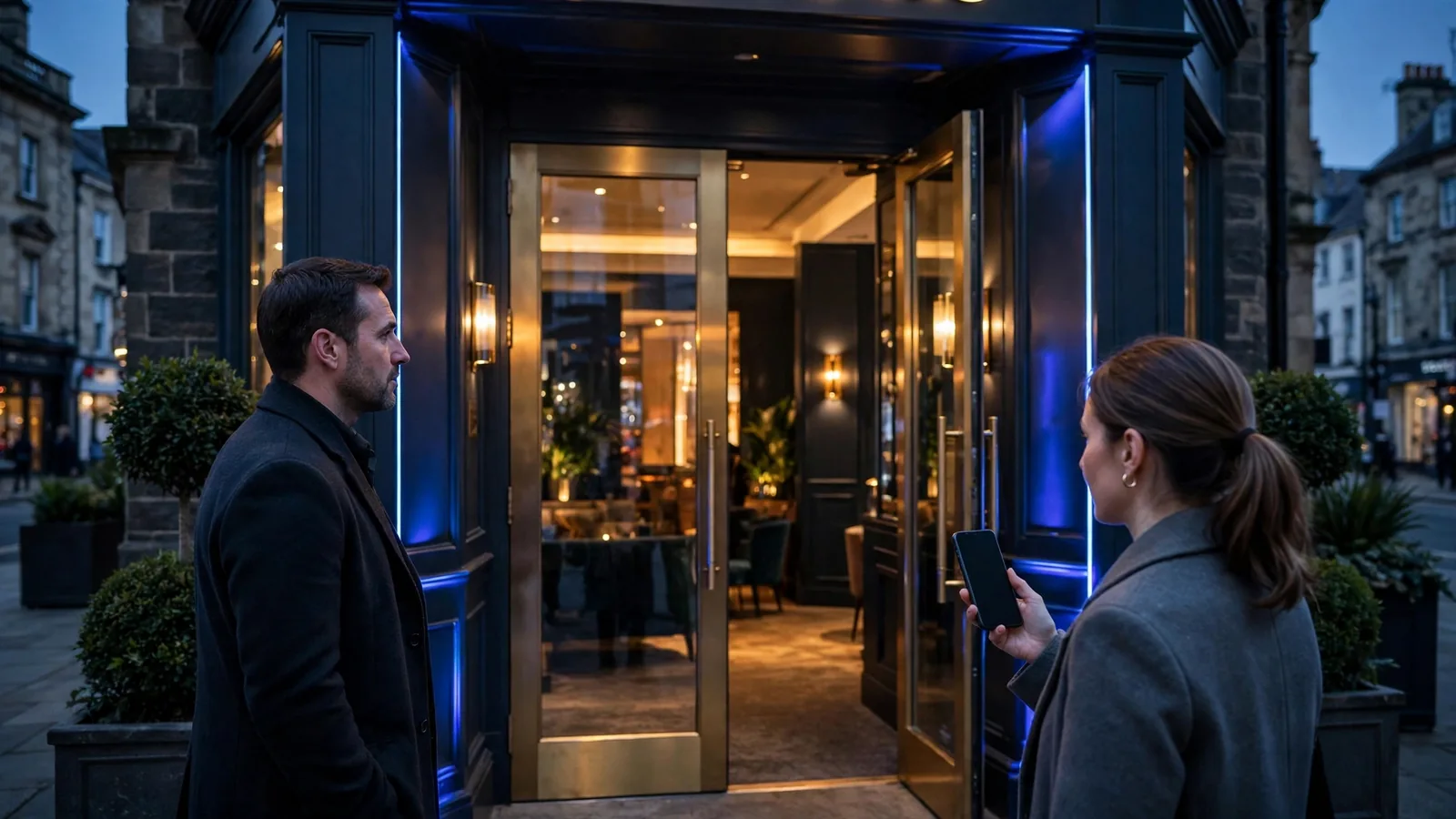
This matters when you see Curacao casinos online described as though they were simply another type of UK site. A casino can be linked to a licence in one jurisdiction and still be outside the UKGC system. Those are separate facts. The word “regulated” without the regulator named is too vague to carry much weight.
It also pays not to treat all non-UK-regulated casinos as Curacao casinos. The broader category includes sites licensed in several jurisdictions, including Malta, Gibraltar and Anjouan. They may share the fact that they are not overseen by the UK Gambling Commission, but that does not make their licences identical. “Offshore” is often used as a loose umbrella term; it is not a specific licence.
When I see a Curacao label, I now read it narrowly. It tells me the operator is presenting Curacao as relevant to its licensing. It does not, on its own, tell me how the operator is regulated in every respect, what protections apply, or whether the site is suitable for me. Those questions need their own answers rather than a reassuring badge.
The same caution applies to phrases such as “best Curacao online casinos”. A ranking can make several unrelated operators look like a neat category, but the shared label alone is not evidence that they offer the same standards or player experience. Nor does it tell you that a casino has UKGC oversight. I would not use “Curacao” as a shortcut for either quality or safety.
Attention: A Curacao label is not a guarantee of quality or safety, nor does it indicate that a casino has UKGC oversight.
So when you come across a Curacao online casino, treat the name as context, not a recommendation. It can help you understand that the operator is pointing to a non-UK licensing jurisdiction. It cannot tell you, by itself, what the site will be like when you use it. That distinction is easy to overlook—and worth keeping in view.
Curacao Casinos and GamStop: A Separate System
A Curacao casino described as “not on GamStop” is not connected to the UK’s national self-exclusion scheme. That distinction matters more than the label on the homepage. If you have asked GamStop to block your access to gambling sites, that block does not automatically carry over to a non-UK-regulated casino operating outside the scheme.
I used to treat self-exclusion as a single switch: turn it on, and gambling sites become unavailable. It is not that simple. GamStop applies to participating operators in the UK system; it cannot enforce an exclusion at a casino that is not part of it. A site may therefore remain accessible even while your GamStop exclusion is active. That is not a loophole to test. It is a reason to pause.
What self-exclusion does — and does not do
Self-exclusion is meant to create distance between you and gambling. At a participating operator, the scheme can prevent you from using that account. But casinos outside GamStop do not receive the exclusion through the scheme, so you should not expect your GamStop registration to close an account there or stop you from opening one.
This applies to Curacao online casinos without GamStop just as it does to other non-UK-regulated casinos outside the scheme. “Exempt” can make it sound like a special approval or a protective status. It is neither. The practical point is simply that the operator is not part of GamStop’s self-exclusion arrangement.

If you have self-excluded because gambling has become hard to control, looking for a site beyond that block can undermine the boundary you put in place. I know how easy it is to tell yourself that one more account is separate from the problem. It isn’t separate from the decision you made to stop.
The safeguards you may lose
The separation is not only about whether you can log in. UKGC-licensed operators are subject to mandatory responsible-gambling requirements, while a non-UK-regulated casino may have less stringent responsible-gambling and data-protection rules. Players using offshore casinos also lose access to the UK’s Financial Ombudsman Service and the mandatory responsible-gambling tools that apply at UKGC-licensed sites.
That can leave you with fewer built-in ways to limit or interrupt play. Do not assume a Curacao casino will offer the same controls you used elsewhere, or that a control shown on its website has the same standing as a UK requirement. The details depend on the operator, and the presence of a button or account setting is not proof that it will provide an equivalent safeguard.
The distinction can be especially important if you are trying to manage spending or take a break. A site may describe its own limits or exclusion options, but those are not GamStop. You would be relying on that operator’s arrangements rather than on the UK scheme. Less independent support. Fewer familiar protections.
If you have already self-excluded
If you registered with GamStop, the safest interpretation is that the exclusion is a boundary to respect, not a challenge to find a casino it does not cover. Avoid creating accounts at Curacao casinos outside GamStop, and do not treat access as evidence that gambling there is suitable for you. A working sign-up page tells you nothing about whether the site can support your decision to stop.
Risk of Relapse
If you have self-excluded via GamStop, seeking out casinos that operate outside the scheme can undermine the boundaries you put in place to control your gambling.
If you are struggling with an urge to gamble, step away from the site and seek support from someone you trust or a specialist service such as GamCare. You do not need to wait until a loss, a dispute, or a crisis to ask for help. If you have already opened an account, consider contacting the operator to request closure, but remember that this is the operator’s own process, not an extension of your GamStop exclusion.
Searches for new Curacao casinos not on GamStop, a welcome bonus or a no-deposit offer can make the separation sound like a feature. For someone who has chosen self-exclusion, it is the opposite: an indication that the exclusion may not protect them on that site. The bonus is beside the point.
Keep the distinction plain: GamStop covers participating operators, not every online casino a UK player can reach. A Curacao casino outside the scheme will not become part of your self-exclusion simply because you registered with GamStop. If your aim is to stay away from gambling, do not rely on the scheme to block a site it does not cover.
What a Curacao Licence Means for UK Players
A Curacao licence and permission to operate in Great Britain are not the same thing. I used to see a foreign licence badge and read it as a general sign-off: someone had approved the casino, so it must be authorised for me to use. That leap misses the key point. A licence from another jurisdiction does not replace the approval required under British gambling law.

The rule for operators is the part that matters most here. If a company provides gambling services to customers in Great Britain, it needs a licence from the UK Gambling Commission, wherever the company itself is based. A Curacao casino licence does not meet that requirement. A site can display a foreign licence and still operate outside the UKGC system.
That distinction is easy to blur when a casino describes itself as “licensed” without making clear which regulator issued the licence or what market the approval covers. The word sounds reassuring; it does not, by itself, mean the operator has permission to serve British customers. The place where a company is incorporated is not a workaround either. The UKGC requirement applies based on the market being served, not just the operator’s address.
For players, the legal position is different from the operator’s. The Gambling Act 2005 is directed at businesses supplying gambling services into the UK market; it is not framed as a criminal offence for an individual to place a bet with an unlicensed site. British law also does not expressly bar citizens from using gambling services licensed overseas. So a player who gambles on a site without a UK licence does not commit a criminal offence just by doing so.
That is not the same as saying the site is authorised to serve people in Great Britain, or that using it is equivalent to gambling with a UKGC-licensed operator. Those are separate questions. I’d keep them separate too: one concerns the operator’s obligations, the other concerns whether a player faces criminal liability merely for using the site.
While the Gambling Act 2005 targets businesses supplying services to the UK, it is not a criminal offence for an individual to place a bet with an unlicensed site.
The phrase “Curacao casino licence UK 2026” can make the issue sound like a licence category that joins the two systems together. It does not. The year in a search or a page title changes nothing about the basic distinction: a Curacao licence is not a UK Gambling Commission licence, and it cannot stand in for one when an operator serves Great Britain.
For UK players comparing Curacao casinos, the practical takeaway is narrow but important. A foreign licence tells you that the operator claims a relationship with a regulator elsewhere; it does not establish that the operator is permitted to serve Great Britain under UK rules. Nor does the fact that players are not criminalised for using an unlicensed site turn the operator’s position into a compliant one. Two different sides of the same arrangement.
I know that sounds like a technical distinction. It is. But it stops a licence badge being mistaken for permission to operate here. A Curacao casino may be accessible to a British player, yet accessibility is not the same as UK authorisation. Short version: separate questions.
How to Read a Curacao Casino Licence Claim
A list of Curacao-licensed casinos can look reassuring, especially when several sites repeat the same badge or wording. I treat that as a lead, not proof. A casino’s own claim tells you what it wants you to believe; it does not, by itself, show who issued the licence or which company it covers.
Start with the exact wording on the operator’s site. Is it naming a licensing authority, or merely saying “licensed” without saying where? Does the page identify the legal company behind the casino? If the badge, terms and company details use different names, pause. A brand name and a corporate name may not look alike, but the operator should make the connection clear enough for you to follow.

Then check the authority named, rather than relying on a copied logo or a review page. Look for information published by that authority and compare the operator’s stated company details with it. If you cannot establish that the authority recognises the company named in the casino’s terms, the claim remains unconfirmed. A link from the casino can help you find the relevant information; it is not independent confirmation just because it opens.
That distinction matters because non-UK-regulated casinos operate without UK Gambling Commission oversight and may be licensed in different jurisdictions, including Malta, Curacao, Gibraltar or Anjouan. Those names are not interchangeable labels for one shared system. A licence attributed to one jurisdiction does not demonstrate that another jurisdiction has authorised the same operator. Nor does a general “internationally licensed” phrase answer the basic question of who is responsible for oversight.
I would also compare the licence claim with the site’s terms and privacy information. Check whether they name the same operating company, and whether the terms explain which entity is providing the gambling service. If the site advertises one company but its legal pages point to another without explaining the relationship, that is a reason to withhold trust, not to fill in the gaps yourself.
Reviews can help you spot questions worth asking, but they are not a substitute for checking the operator’s own legal details against the named authority’s information. A glowing review may repeat the casino’s wording; a negative one may describe a customer’s experience without proving anything about the licence. Read them as separate pieces of evidence, not as a verdict.
- Match the named authority with the legal company
- Check the operator’s own legal pages and terms
- Verify the licence with the issuing authority
- Rely on copied logos or review pages alone
- Assume a brand name confirms a licence
- Trust a badge without checking the corporate entity
The same goes for a Curacao slot or payment option mentioned in a review. A game title, payment logo or polished licence badge does not verify the operator’s legal identity. Those details can change, and a list assembled from old pages may no longer describe what a site currently claims. “Curacao casino” is a label to investigate, not a safety rating.
So, is a Curacao casino safe? The label alone cannot settle that. I used to see a licence badge and stop asking questions. That was too easy. Match the named authority, legal company and terms; if those pieces do not line up, do not treat a list or review as confirmation. No badge does the checking for you.
UK Players, Crypto and Offshore Payment Routes
Payment logos can make a site look more accessible than it really is. A non-UK-regulated casino may list cards, e-wallets, bank transfers and cryptocurrency, sometimes handled through alternative processors. That describes possible payment routes across offshore sites; it does not confirm that a particular Curacao casino accepts customers from Britain, or that every method shown will be available to you.
I used to read a deposit menu as a promise: if I could put money in one way, I assumed I could get it back the same way. That was a bad assumption. A listed method is not a guarantee that it will work for every account, and a supported deposit route does not guarantee a matching withdrawal route. Check the payment terms before sending funds, and don’t rely on a logo alone.
Crypto can look like a neat workaround when card payments are unavailable. It is worth separating that practical point from the legal one: cryptocurrency payments can bypass the UK ban on gambling funded by credit cards. That does not make a gambling operator locally licensed, nor does it show that it is willing to serve a UK customer. A Curacao crypto casino is still a casino whose actual payment options and customer terms need to be checked.
The distinction matters because crypto is not simply another card with a different logo. You may have to use a wallet or another processor, and the casino’s own terms determine how it handles the transaction. I would check which currencies and routes it names, whether the account must be verified before a transaction, and what the operator says about returning funds. If those details are vague, I would not treat the payment page as reassurance.
Cards, e-wallets and bank transfers can also be routed through alternative processors. So the name on a payment screen may not tell the whole story about who handles the transaction. Before choosing a route, read the operator’s payment conditions and check that they match what you can actually use. Don’t assume that a method available in one country or on one account is available to a UK customer.
Some offshore sites may offer crypto deposits, but that does not establish that they accept UK players. I would not send funds just because the site accepts a familiar coin or displays a familiar payment brand. First check whether the operator’s terms allow your location and whether the route works for both the intended deposit and any later withdrawal. The payment option is only one part of the decision. No shortcut.
Attention: A supported deposit method does not guarantee a matching withdrawal route; always check the payment terms before sending funds.
Casino Sites, Slots and the Small Print on Offers
A welcome bonus can look generous until you work out what you have to do before withdrawing anything. I used to read the headline and skim the terms; that was the wrong order. On a Curacao casino site, treat the offer as a set of conditions to inspect, not extra money you can count on.
Start with the wagering requirement. It tells you how much qualifying play is required before bonus-related funds or winnings can be withdrawn. One specialist review reports offshore welcome offers with requirements of 35x or higher, but that is not a rule for every casino or a promise about an offer currently available. Check the live terms for the specific promotion, and find out whether the multiplier applies to the bonus, your deposit, or both. Those definitions can change the amount of play involved substantially.
Free spins need their own check. The important details are not just how many spins appear in the banner, but which games they apply to, when they expire, and what happens to any winnings. A specialist review describes free-spin winnings carrying wagering conditions in the range of 30 to 50 times those winnings, alongside withdrawal caps between £5 and £50. Treat those figures as reported terms, not standard conditions: the offer in front of you may differ. The cap can matter more than the spin count.
Expiry can catch you out too. A specialist review says some free-spin packages have short validity windows, from 24 to 72 hours. That is a report about offers, not a universal deadline. Look for the precise expiry time in the current terms, including whether the clock starts at registration, activation or another point. If the wording is unclear, assume nothing.
When browsing Curacao casino slots, familiar titles such as Book of Dead or Starburst may help you identify a game, but the game name does not tell you whether it qualifies for a bonus. Offers often exclude particular games or count play on different games at different rates. Check the eligible-games list before playing; otherwise, you may spend time on a slot and find that it has not moved the bonus requirement as expected.
I now read the terms before accepting anything. Look for expiry, eligible games, the wagering base, and any cap on what can be withdrawn from bonus play. A “free” offer can still come with plenty of strings. Don’t guess.
Curacao Gaming Licences Are Not All the Same
A “gaming licence” can sound like a single, familiar stamp of approval. It isn’t. The words tell you that an operator is claiming some form of permission from a regulator; by themselves, they do not explain what that regulator oversees or what recourse you would have if something went wrong.
I used to treat the licence badge as the important bit and move on. That was too quick. A licence belongs to a particular jurisdiction, and the rules attached to it are not automatically the same as those in another jurisdiction. Non-UK-regulated casinos may be licensed in places such as Malta, Curaçao, Gibraltar or Anjouan. Those names are not interchangeable labels for one shared system.
That distinction matters when you see a site described as a Curaçao-licensed casino or a Curaçao eGaming casino. The wording alone does not tell you how the operator is supervised, which business entity the licence covers, or what protections apply to customers. Nor does a polished badge settle those questions. “Licensed” is a starting point, not a full account of the arrangement.
Regulatory Realities
- A gaming licence is a claim of permission, not a universal standard of protection
- Different jurisdictions (Malta, Curacao, Gibraltar, Anjouan) have different rules and oversight
- A licence badge is a starting point for investigation, not a final verdict on safety
The same goes for ratings. A high score on a review page may reflect the reviewer’s own criteria; it is not itself a regulator’s finding and cannot establish the scope of a licence. I’ve learned to separate a reviewer’s verdict from the underlying regulatory claim. Different things.
So what should the label make you ask? Which jurisdiction issued the permission, what activity it covers, and whether the named operator is the business actually running the site. Those are distinct points. A licence name on a homepage does not answer all of them, and a rating cannot fill in the gaps.
It is also worth keeping the jurisdictions straight. A Curacao licence is not a Malta licence, a Gibraltar licence or an Anjouan licence, even if all are described in broad terms as gaming licences. The rules and oversight belong to the issuing jurisdiction, not to the phrase used in a casino’s marketing.
I wouldn’t read “licensed” as a guarantee of a particular standard of protection. It tells you there is a licensing claim to understand; it does not, on its own, tell you what that claim means in practice. That’s the part worth checking before you trust the badge.
Licensed Crypto Casinos: Check the Jurisdiction, Not the Slogan
“Licensed” and “crypto-friendly” can sound like a reassuring pair of words. They answer different questions, though. A crypto option tells you something about how a site may take payment; it does not tell you which authority, if any, oversees its gambling operation. I used to read the payment badge first and treat the licence as a footnote. That was the wrong order.
If a casino says it has a Curacao licence, look for the actual licensing jurisdiction in its terms and account information. A claim on a homepage is not the same as knowing which regulator issued the licence or what rules apply. Nor should a Curacao claim be treated as proof that the operator is licensed somewhere else. The label needs to match the operator you are dealing with, not just the wording in an advert.
The same care applies when crypto is front and centre. A site may describe itself as a “licensed crypto casino”, but that phrase alone does not establish the scope of its licence or the protections attached to it. Separate the payment feature from the regulatory claim, then check the jurisdiction named in the operator’s own information. Don’t assume that a licence from one place carries the same terms or oversight as a licence from another.
Anjouan is a useful example of why the distinction matters, but it is not a description of Curacao licensing. An Anjouan licence does not authorise an operator to serve the United Kingdom or other markets listed as restricted. Under Anjouan’s framework, casinos are not required to arrange independent RNG testing, audits, or segregated player funds. Those are specific limitations of that jurisdiction’s framework; they should not be casually attributed to Curacao.
I’d also avoid treating a coin logo, a wallet option, or the word “licensed” as a substitute for identifying the regulator. They are not interchangeable pieces of evidence. And if an operator’s stated licence jurisdiction does not match the company information or the terms you are reading, pause rather than filling in the blanks yourself.
Crypto is a payment route, not a regulatory standard. The licence claim is a separate matter, and the jurisdiction named beside it is what tells you which rules to investigate. Small distinction. Big difference.
Under the Anjouan framework, casinos are not required to arrange independent RNG testing, audits, or segregated player funds.
Skrill, Neteller and Withdrawals: What Can Go Wrong
Seeing Skrill, Neteller or Trustly mentioned beside a casino does not tell you whether you can use that method to withdraw. A payment option may be available for deposits but not payouts, or the operator may set different rules for each route. I’ve learned not to treat a logo on a cashier page as a promise about getting money back.
Timing is just as uncertain. Some accounts put withdrawals at non-GamStop casinos at between 24 hours and five business days, depending on the payment method. Other accounts of non-UK-regulated casinos describe delays of three or four weeks, and there is no regulatory clock requiring the operator to resolve a late payout. Those estimates conflict; neither is a reliable deadline for a particular casino or transaction.
That matters when you are weighing up a site advertised as a Curacao casino with Skrill or Neteller. The method’s name does not establish the operator’s withdrawal procedure, how long checks will take, or whether the same route will remain available when you cash out. Read the cashier terms and withdrawal rules before depositing, and check whether the operator can require you to use another method. Keep a copy of the terms you relied on.
Some specialist reviews report that non-UK-regulated casinos may cap withdrawals daily, weekly or monthly, leaving a larger win to be paid in instalments. Treat that as a possibility to verify in the operator’s own current rules, not as a standard condition across Curacao casinos. Look for limits, fees, processing stages and any stated reasons a payment can be paused. If the wording is vague, assume you may not know the full process until you try to withdraw.
A familiar e-wallet does not remove the operator from the equation. Your bank or payment provider may show a transfer as completed while the casino’s payout is still pending, and depositing successfully says nothing definite about the route back. I’d check withdrawal terms first, then decide whether the uncertainty is worth accepting. The slot catalogue can wait. Getting paid is the point.

Are Curacao Casinos Legit or Safe? The Risks Behind the Claim
A Curacao label alone cannot tell you whether a casino is safe to use. “Legit” may mean the operator has some form of licence; it does not automatically mean the protections match those at a UKGC-regulated site. I used to treat a licence badge as a sort of safety net. It isn’t one.
Away from UKGC oversight, responsible-gambling and data-protection standards may be weaker, and you should not assume the site provides the safeguards you would expect from a British-regulated operator. You also lose access to the UK’s Financial Ombudsman Service and mandatory responsible-gambling tools. If a dispute develops, there is no UK regulator to step in on your behalf.
Verification can become part of the risk, too. A specialist review has reported offshore operators asking for notarised paperwork or a video call before releasing a withdrawal. That is a reported practice, not something I’d assume every Curacao casino does. Still, it is worth considering before you deposit: a request for extra checks can leave your money tied up while you try to satisfy the operator.
Be careful not to transfer claims about one jurisdiction to another. The specific complaint and fund-protection concerns often discussed in this context apply to Anjouan-licensed casinos, not to Curacao casinos as a group. In Anjouan, the authority does not take up, mediate or decide player complaints. Casinos licensed there are not required to keep player funds separate; if an operator fails, customers rank as unsecured creditors. Those are serious limitations, but they are not evidence about every Curacao operator.
So, are Curacao casinos regulated? A licence may indicate oversight in its issuing jurisdiction, but the word alone does not establish the level of protection available to you. Are they safe? There is no blanket answer. I’d look beyond the badge, read the terms on withdrawals and verification, and treat unclear complaint routes or fund protections as a real warning. Less reassurance. More checking.
Are gaming sites not on GamStop permitted for UK players?
Yes, UK law does not explicitly prohibit British players from using gambling services licensed abroad, and players do not commit a criminal offence by using an unlicensed site. However, operators serving customers in Great Britain need a UK Gambling Commission licence.
Are Anjouan-licensed casinos safe and fair?
An Anjouan licence does not guarantee that player funds are segregated or that games undergo RNG testing or audits. The licence also does not provide an independent dispute-resolution route comparable to UKGC-approved services.
What payment options are available at non-UK casinos?
You may find credit cards, e-wallets, bank transfers and cryptocurrencies, as well as payments charged to a mobile phone bill or deducted from a prepaid balance. Available methods vary by site.
Are non-UK-regulated casinos legal for UK players to use?
UK law does not explicitly prohibit British players from using gambling services licensed in other countries, and players do not commit a criminal offence by gambling on an unlicensed site. Operators serving customers in Great Britain must have a UK Gambling Commission licence.
What is the biggest risk of playing at a non-UK-regulated casino?
You may have fewer protections if something goes wrong: non-UK-regulated casinos may lack mandatory responsible-gambling tools and an independent dispute-resolution route, and you cannot use the UK’s Financial Ombudsman Service. With Anjouan-licensed casinos, player funds are not guaranteed to be segregated.
What are non-UK-regulated casinos?
They are online gambling sites that operate without oversight from the UK Gambling Commission. They may be licensed in jurisdictions such as Malta, Curacao, Gibraltar or Anjouan.
Written by the editors at Reclamationstudios.org.